


Introduction: Rediscovering Our Primal Roots
In a world dominated by smartphones, digital currencies, and an ever-expanding web of financial institutions, it’s easy to forget that for the vast majority of human history, we lived without these modern conveniences. The statement “You can survive and replicate without any money or industrial banking political complex if you know how to grow your own food and survive in a jungle” isn’t just a hypothetical scenario — it’s a reality that has been lived by countless individuals and communities throughout history and even in the present day.
This idea challenges our fundamental assumptions about what we need to survive and thrive. It invites us to question the necessity of our current economic systems and to explore alternative ways of living that might be more in harmony with nature and our own innate human capabilities.
In this article, we’ll embark on a journey through time and across cultures to explore the viability, challenges, and potential benefits of living self-sufficiently in nature. We’ll delve into historical examples, modern-day practitioners, the essential skills required, and the profound implications this lifestyle could have on our relationship with the environment and ourselves.
So, let’s step away from our screens for a moment and imagine a life where the rustle of leaves replaces the ping of notifications, where knowledge of plants and animals is more valuable than stock market trends, and where the rhythm of days is set by the sun and seasons rather than work schedules and deadlines.
1. A Walk-Through History: Self-Sufficiency in Traditional Societies

To understand the possibility of living without money or modern banking systems, we must first look to our past. For millennia, human societies thrived without currency, relying instead on intricate knowledge of their environments and sophisticated social structures.
The Amazon: A Forest of Abundance
Contrary to the long-held belief that the Amazon was a pristine wilderness untouched by human hands, recent archaeological and anthropological research has revealed a different story. The Amazon rainforest, with its incredible biodiversity, was home to complex societies for thousands of years before European contact.
Dr. Anna Roosevelt, an archaeologist who has spent decades studying the ancient Amazon, describes the findings: “What we’re discovering is that the Amazon was not just a wilderness with small bands of people eking out a living. There were large, settled populations with complex social structures and advanced agricultural techniques.”
Evidence of this can be seen in the terra preta, or “dark earth,” found throughout the Amazon. This incredibly fertile soil was created by ancient Amazonians through a process of adding charcoal, bone, and manure to the otherwise nutrient-poor rainforest soil. This allowed them to farm sustainably in an environment that modern agriculture finds challenging.
Moreover, the diversity of the Amazon itself may be partly due to human influence. Many of the fruit trees that seem to grow wild were likely cultivated by ancient peoples. As Charles Clement, a researcher at Brazil’s National Institute for Amazonian Research, explains, “The Amazon is not just a natural environment, it’s a cultural environment. It’s a 10,000-year-old garden.”
These ancient Amazonians didn’t just survive; they thrived, developing sophisticated systems of agroforestry, water management, and social organization — all without money or banks.
The San People of the Kalahari
On the other side of the world, in the harsh environment of the Kalahari Desert, the San people have lived for over 20,000 years. Their deep knowledge of their environment allowed them to find food and water where others would see only barren landscape.
Elizabeth Marshall Thomas, an anthropologist who lived with the San in the 1950s, wrote in her book “The Old Way”: “They knew every plant and every animal within their area, its Latin name (had there been Latin), its uses, its habits… No zoologist knew animals better than they did, no botanist knew plants better.”
The San’s tracking skills are legendary. They can read the tiniest signs in the sand to tell what animals have passed, how long ago, and in what condition. This allowed them to hunt successfully in an environment where game is scarce and water even scarcer.
But perhaps more impressive than their survival skills was their social structure. The San lived in small, egalitarian groups where sharing was not just encouraged but expected. There was no accumulation of wealth, no hierarchy based on possessions. Instead, their society was built on mutual aid and collective knowledge.
These examples from the Amazon and the Kalahari demonstrate that humans are capable of not just surviving, but creating complex, sustainable societies without the trappings of modern economics. They relied instead on an intimate knowledge of their environment and strong social bonds.
2. Modern-Day Practitioners: Living Off-Grid in the 21st Century

While traditional societies offer compelling examples of self-sufficiency, one might argue that living without money is no longer possible in our interconnected, modern world. However, there are individuals and communities today who choose to live off-grid, growing their own food and minimizing their reliance on the modern economic system.
Eustace Conway: The Last American Man
Eustace Conway has been living off the land in the Appalachian Mountains of North Carolina since the 1970s. His story, as told in Elizabeth Gilbert’s book “The Last American Man,” is a testament to the possibility of self-sufficiency in the modern age.
Conway left his suburban home at 17 and moved into the woods, where he built his own shelter, hunted and gathered his food, and made his own clothes from animal skins. He now owns a 1000-acre preserve called Turtle Island, where he teaches others primitive skills and sustainable living.
In an interview, Conway explained his philosophy: “The basic needs of humanity have not changed for thousands of years. We need food, water, shelter, and community. Everything else is just extra.”
Conway’s life is not entirely removed from modern society — he interacts with the outside world, particularly through his educational programs. However, his day-to-day existence is largely self-sufficient, demonstrating that it’s possible to live primarily off the land even in 21st century America.
The Earthship Community: Sustainable Living in New Mexico
In the high desert of New Mexico, a community of people lives in “Earthships” — homes built from recycled materials that are designed to be completely self-sufficient. These structures collect their own water, generate their own electricity, maintain their own comfortable temperature, and even allow for food production.
Michael Reynolds, the architect behind the Earthship concept, explains: “The Earthship is aimed at the average person with no building skills. It’s about taking care of yourself without being dependent on fragile municipal infrastructure or fossil fuels.”
Earthships use passive solar heating and cooling, rainwater harvesting, and contained sewage treatment systems. Many also include indoor gardens where residents can grow a significant portion of their own food.
While Earthship residents aren’t completely removed from the monetary system, their need for money is significantly reduced. They don’t pay for utilities, and their food costs are lower due to home production. This community shows how clever design and a commitment to sustainability can dramatically reduce dependence on traditional economic systems.
The Yanomami: Guardians of the Amazon
Even in our globalized world, there are still communities living much as their ancestors did centuries ago. The Yanomami people of the Amazon rainforest, straddling the border of Brazil and Venezuela, continue to live largely self-sufficiently, though they face increasing pressure from the outside world.
Davi Kopenawa, a Yanomami shaman and spokesperson, has written about his people’s way of life in “The Falling Sky.” He describes a life intimately connected with the forest: “The forest is alive. It can only die if the white people persist in destroying it. If they succeed, the rivers will disappear underground, the soil will crumble, the trees will shrivel up, and the stones will crack in the heat. The dried-up earth will become empty and silent. The xapiri spirits who come down from the mountains to play on their mirrors will flee far away. Their fathers, the shamans, will no longer be able to call them and make them dance to protect us.”
The Yanomami cultivate gardens in forest clearings, hunt with bows and arrows, and gather wild foods. They have extensive knowledge of medicinal plants, which they use to treat a wide range of ailments. While they do have some contact with the outside world and occasionally trade for manufactured goods, their day-to-day life remains largely self-sufficient.
These modern examples show that living without heavy reliance on money and modern economic systems is not just a historical curiosity, but a viable option even in today’s world. However, it’s important to note that this lifestyle requires significant knowledge, skills, and often, a supportive community.
3. The Essential Skills: What It Takes to Survive in the Jungle

Living self-sufficiently in a jungle environment requires a vast array of skills and knowledge. It’s not just about physical survival, but about creating a sustainable way of life that can be maintained over the long term.
Foraging and Plant Identification
One of the most crucial skills for jungle survival is the ability to identify and use various plants. This goes far beyond simply knowing what’s edible — it involves understanding the medicinal properties of plants, which parts are useful for crafting tools or building shelters, and how to sustainably harvest without depleting resources.
Dr. Mark Plotkin, an ethnobotanist who has spent decades studying with indigenous healers in the Amazon, describes the depth of this knowledge: “In Western medicine, we tend to look for single compounds to treat specific conditions. Indigenous healers often use complex combinations of plants, sometimes in ways that seem counterintuitive to us, but which have been refined over generations.”
For example, the Yanomami use over 500 species of plants for various purposes. They can identify subtle differences between similar-looking species, understanding which are edible, which are medicinal, and which are toxic. This knowledge is not static — it evolves as the forest changes and as new uses for plants are discovered.
Hunting and Fishing
In most jungle environments, plant foods alone are not enough to sustain human life long-term. The ability to obtain animal protein through hunting and fishing is crucial. This involves not just the technical skills of using weapons or setting traps, but a deep understanding of animal behavior and ecology.
Jake Swamp, a Mohawk elder, once explained the holistic nature of traditional hunting: “When we hunt, we’re not just taking an animal’s life. We’re entering into a relationship with that animal, with its spirit. We have to understand its ways, respect its life, and use every part of it once it’s given to us.”
In the Amazon, many indigenous groups use blowguns with curare-tipped darts for hunting. The curare, a powerful muscle relaxant, is derived from a combination of plants. The production of curare and the use of the blowgun require incredible precision and knowledge passed down through generations.
Fishing techniques vary widely depending on the specific environment. They might include hand-fishing, spearfishing, or the use of plant-based poisons that stun fish without making them inedible. Each method requires intimate knowledge of fish behavior and aquatic ecosystems.
Shelter Building
In a jungle environment, shelter is crucial for protection from rain, insects, and sometimes dangerous animals. Building an effective shelter requires knowledge of local materials and architectural techniques that have been refined over centuries.
The Huaorani people of Ecuador, for example, build large communal houses called onko. These structures are made entirely from materials found in the forest — palm leaves for the roof, tree trunks for support poles. The design allows for excellent ventilation while keeping out rain, and the structures can last for years with proper maintenance.
Water Procurement and Purification
While jungles are typically associated with abundance of water, finding clean, safe drinking water can be a challenge. Many rivers and streams may be contaminated with parasites or bacteria.
Indigenous peoples have developed various methods for finding and purifying water. Some, like the Penan of Borneo, are expert at finding and extracting water from certain vines when other water sources are scarce. Others use natural filtration methods, like running water through layers of sand and charcoal.
Fire Making
The ability to make fire is fundamental to survival in any environment. In the humid jungle, where dry tinder can be hard to find, this skill becomes even more crucial.
Traditional fire-making methods, like the hand drill or fire plow, require not just technique but an understanding of which woods work best in the local environment. Fire is used not just for warmth and cooking, but for processing certain foods to make them edible, for crafting tools, and often plays a role in medicinal and spiritual practices.
4. Cultivating Your Jungle Garden

Creating a sustainable food source is key to long-term jungle survival. While foraging is essential, cultivating your own garden provides a reliable food supply and reduces the need to constantly search for wild edibles.
Choosing the Right Crops
Some ideal crops for jungle cultivation include:
- Cassava: High-yielding and tolerant of poor soils
- Taro: Thrives in wet conditions and provides edible leaves and tubers
- Plantains: A staple food rich in carbohydrates and vitamins
- Pigeon peas: Nitrogen-fixing legumes that improve soil quality
Interestingly, many of our modern crops originated in tropical forests. For instance, cacao, the source of chocolate, is native to the Amazon rainforest.
Permaculture Principles in the Wild
Permaculture, a system of agricultural and social design principles centered around simulating natural ecosystems, is perfectly suited for jungle gardening. Key permaculture principles to apply include:
1. Observe and interact: Understand your specific jungle environment
2. Catch and store energy: Utilize natural water flows and sunlight patterns
3. Obtain a yield: Focus on high-yielding, multi-purpose plants
4. Apply self-regulation and accept feedback: Learn from successes and failures
Studies have shown that permaculture techniques can increase crop yields by up to 80% compared to conventional farming methods.
Natural Pest Control
In the jungle, your garden will face numerous pests and diseases. However, chemical pesticides are neither available nor desirable in this setting. Instead, focus on natural pest control methods:
- Companion planting: Grow pest-repelling plants like marigolds or lemongrass
- Biological control: Encourage beneficial insects and animals that prey on pests
- Physical barriers: Use leaves or bark to create protective barriers around plants
- Neem oil: A natural pesticide derived from the neem tree, effective against many insects
5. Thriving Without Modern Conveniences
Natural Medicine and First Aid
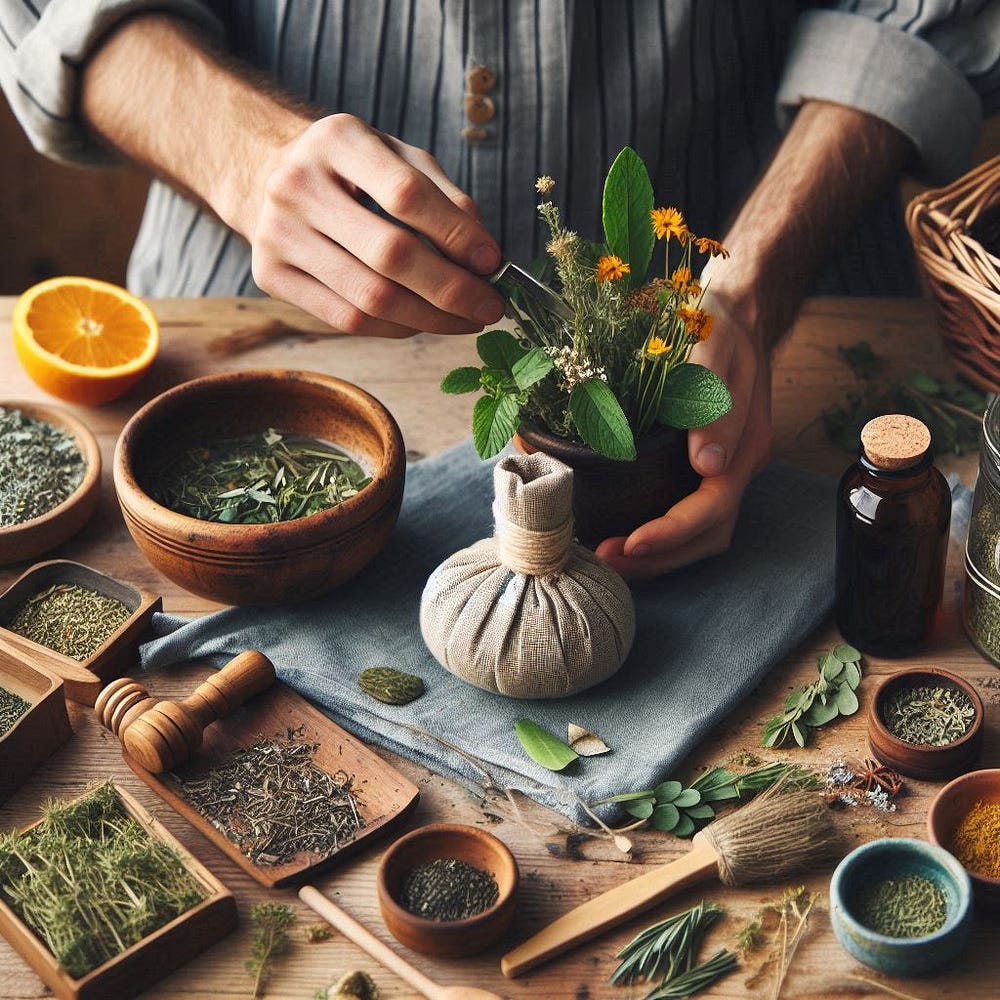
In the jungle, you’re your own doctor. Understanding natural remedies and basic first aid is crucial for long-term survival. Amazingly, about 25% of Western pharmaceuticals are derived from rainforest plants. Here are some key aspects of jungle medicine:
1. Identifying medicinal plants:
o Aloe vera: For burns and skin irritations
o Cinchona bark: Contains quinine, used to treat malaria
o Turmeric: Anti-inflammatory and wound-healing properties
2. Creating natural remedies:
o Poultices: Mashed herbs applied directly to wounds or sores
o Tinctures: Herb-infused alcohol for preserving medicinal properties
o Teas: Hot water extractions of medicinal plants
3. Basic first aid skills:
o Wound cleaning and dressing
o Splinting broken bones
o Recognizing and treating common tropical diseases
Remember, while natural remedies can be effective, they’re not a substitute for professional medical care in serious situations.
Creating Tools from Natural Materials
Your ability to craft tools will significantly impact your quality of life in the jungle. Here are some essential tools you can create:
1. Cordage: Made from plant fibers, crucial for building and crafting
2. Cutting tools: Sharp edges can be created from bamboo, stone, or bone
3. Containers: Gourds, large leaves, or bamboo sections for carrying water and food
4. Fishing gear: Hooks from thorns, lines from plant fibers
5. Fire-starting tools: Friction-based methods using dry wood
Interestingly, many indigenous cultures have perfected these techniques over thousands of years. For instance, the Yanomami people of the Amazon use over 500 plants for food, medicine, and tool-making.
Preserving Food Without Electricity
In the humid jungle environment, food spoilage is a constant challenge. Here are some traditional preservation methods:
1. Smoking: Ideal for meat and fish, also adds flavor
2. Sun-drying: Works well for fruits and some vegetables
3. Fermentation: Preserves food while increasing nutritional value
4. Salt curing: Effective for meat, but requires access to salt
5. Pit storage: Underground storage can keep some foods fresh longer
These methods not only preserve food but can also enhance flavors and nutritional content. For example, fermentation can increase the bioavailability of nutrients and introduce beneficial probiotics.
6. The Mental Game: Psychological Aspects of Jungle Living

Surviving in the jungle isn’t just about physical skills — it’s also a significant mental challenge. Here’s how to maintain your psychological well-being:
1. Embrace solitude: Learn to enjoy your own company and the sounds of nature
2. Practice mindfulness: The jungle provides a perfect setting for meditation and self-reflection
3. Set daily goals: Maintain a sense of purpose and accomplishment
4. Stay intellectually stimulated: Study nature, practice skills, or keep a journal
5. Prepare for loneliness: Develop strategies to cope with limited human contact
Studies have shown that exposure to nature can significantly reduce stress and improve mental health. Your jungle environment can become a powerful tool for personal growth and self-discovery.
7. The Skills in Practice: A Day in the Life
To truly understand what it means to live self-sufficiently in a jungle environment, let’s walk through a typical day. This scenario is based on accounts from various indigenous groups and modern practitioners of wilderness living.
Dawn breaks over the canopy, and with it, the cacophony of jungle sounds intensifies. Our self-sufficient dweller, Maya, stirs in her shelter, a sturdy structure made of bamboo and palm thatch. She’s slept well, lulled by the rhythm of nocturnal insects and distant howler monkeys.
Maya’s first task of the day is to check her water supply. She walks to a nearby stream, carrying a container made from a hollowed gourd. The water isn’t safe to drink directly, so she’ll filter it through layers of sand, charcoal, and cloth — a technique passed down through generations.
As the sun climbs higher, Maya turns her attention to food. She visits her small garden clearing, where she cultivates cassava, plantains, and various medicinal herbs. She harvests some ripe plantains and tends to the other plants, removing pests and ensuring they have enough water.
But the garden alone isn’t enough to sustain her. Maya spends the next few hours foraging in the surrounding forest. She knows exactly where to find certain fruits that are in season, which mushrooms are safe to eat, and which leaves can be used for tea or medicine. Her keen eyes spot a cluster of brazil nuts high in a tree — a valuable source of protein and healthy fats.
As midday approaches and the heat intensifies, Maya returns to her shelter for a rest. She uses this time to work on crafts — perhaps weaving a new basket from palm fibers or carving a tool from wood. These activities aren’t just practical; they’re a form of cultural expression and a link to ancestral traditions.
In the cooler afternoon, Maya sets out to check her fishing lines in a nearby river. She’s rewarded with a medium-sized fish, which will provide a good source of protein. Nothing goes to waste — the bones will be used to make needles, the scales as an abrasive for smoothing wood.
As evening approaches, Maya prepares her meal. She cooks the fish and plantains over a fire, adding some foraged greens and mushrooms. The meal is simple but nutritious, and Maya savors each bite, knowing intimately where each component came from and the effort involved in procuring it.
After dinner, as darkness falls, Maya sits by her fire. This is a time for reflection, for telling stories, or for planning the next day’s activities. She might use this time to make repairs to her tools or clothing, or to prepare medicines from plants she’s collected.
Before sleeping, Maya ensures her fire is safe and checks her surroundings one last time. In the jungle, vigilance is crucial — a careless moment can lead to danger from wildlife or the elements.
This day, while challenging by modern standards, represents a profound connection to the environment and a deep understanding of the cycles of nature. It’s a life that requires constant learning, adaptation, and respect for the natural world.
8. Building a Sustainable Community in the Wild
While solo survival is possible, humans are inherently social creatures. If you choose to create or join a jungle community, consider these factors:
1. Division of labor: Assign roles based on individual skills and preferences
2. Consensus decision-making: Implement a fair system for group choices
3. Sustainable population: Ensure your community doesn’t outgrow available resources
4. Cultural development: Create shared rituals and celebrations to foster unity
5. Knowledge sharing: Establish systems to pass on crucial survival skills
Interestingly, some modern intentional communities have successfully implemented these principles. For example, the Earthship community in New Mexico has created a self-sufficient, off-grid lifestyle that could be adapted to jungle living.
9. Legal and Ethical Considerations

Before embarking on your jungle adventure, it’s crucial to consider the legal and ethical implications:
1. Land rights: Ensure you’re not encroaching on protected areas or indigenous territories
2. Environmental impact: Practice leave-no-trace principles to minimize your ecological footprint
3. Local laws: Research regulations regarding hunting, foraging, and land use in your chosen area
4. Emergency preparedness: Have a plan for medical emergencies or natural disasters
5. Respect for indigenous cultures: If living near native communities, respect their traditions and territories
It’s worth noting that about 60 million indigenous people are almost wholly dependent on forests, including many jungle-dwelling communities. Your presence should not negatively impact their way of life.
10. The Challenges: Facing the Realities of Jungle Life
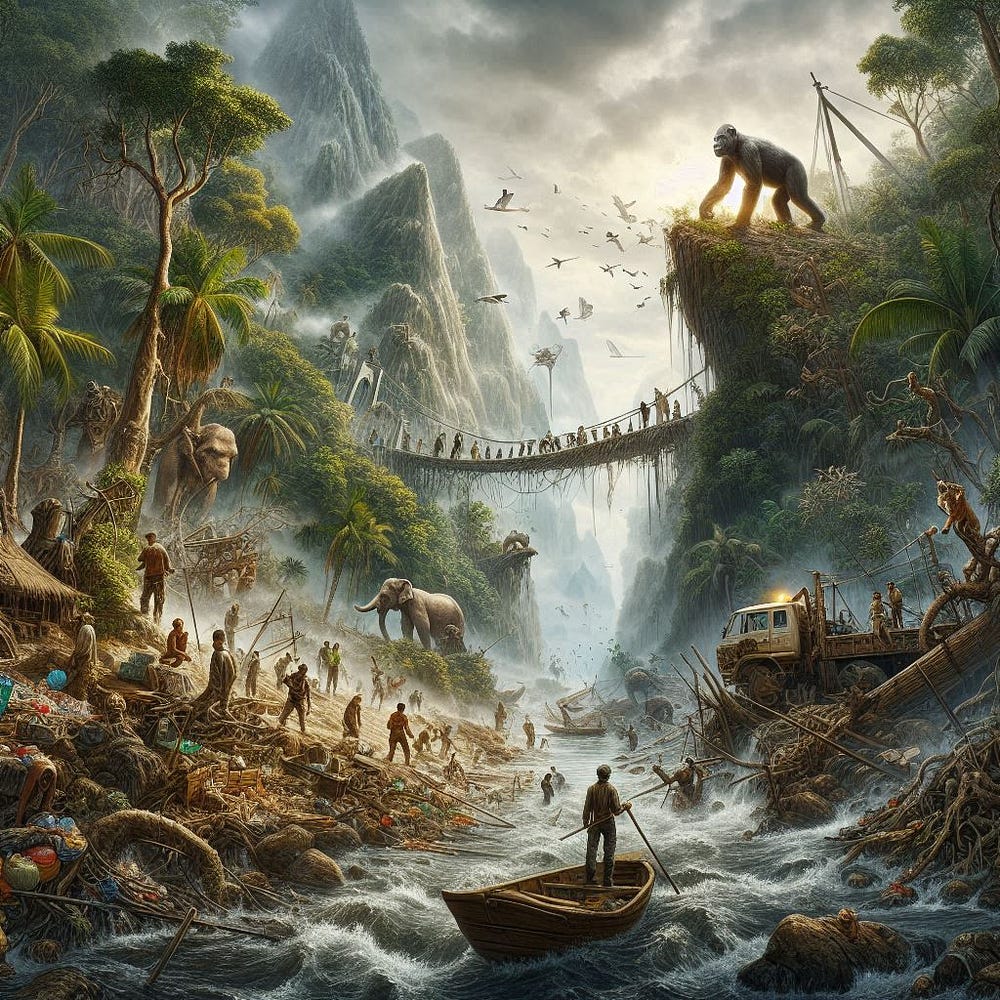
While the idea of living self-sufficiently in the jungle might seem idyllic, it comes with significant challenges. Understanding these is crucial for anyone considering such a lifestyle, and helps explain why many indigenous peoples, when given the choice, opt for at least some level of engagement with the modern world.
Health Risks
One of the biggest challenges of jungle life is managing health without access to modern medicine. Tropical environments are home to a host of diseases that can be deadly without proper treatment.
Malaria, for example, is a constant threat in many jungle regions. While some indigenous groups have developed partial resistance over generations, and use local plants to treat symptoms, malaria remains a leading cause of death in many tropical areas.
Parasitic infections are another major concern. Dr. Chico Mendes, a Brazilian public health researcher, explains: “In some remote Amazonian communities, nearly everyone is infected with some form of parasite. They’ve learned to live with it to some extent, but it still impacts their health and quality of life.”
Injuries that would be easily treatable in a modern hospital can become life-threatening in the jungle. A simple cut can lead to serious infection, and broken bones may not heal properly without expert care.
Environmental Hazards
The jungle, while beautiful, can also be incredibly dangerous. Venomous snakes, insects, and plants pose constant threats. Flash floods can wipe out homes and gardens. Falling trees or branches in storms can be deadly.
Jorge Moreno, a guide who works with eco-tourists in Costa Rica, shares: “People come here with a romantic idea of the jungle. They think it’s all beautiful birds and cute monkeys. But the reality is that the forest demands constant vigilance. One moment of carelessness can have serious consequences.”
Isolation and Psychological Challenges
Living in the jungle, especially for those not born into it, can be psychologically challenging. The isolation from wider human society, the constant proximity to nature (which can be both awe-inspiring and terrifying), and the daily challenges of survival can take a mental toll.
Richard Evan Schultes, a pioneer in the field of ethnobotany who spent years living with indigenous tribes in the Amazon, wrote about the psychological challenges in his journals: “There are moments of incredible beauty and connection, but also times of profound loneliness and doubt. The jungle doesn’t care about your feelings — it simply is. Learning to accept that is perhaps the greatest challenge.”
Maintaining Long-term Sustainability
While indigenous peoples have managed to live sustainably in jungle environments for millennia, this has typically been in the context of relatively small populations with vast territories. As populations grow and territories shrink due to outside encroachment, maintaining this balance becomes increasingly difficult.
Victoria Tauli-Corpuz, a UN Special Rapporteur on the Rights of Indigenous Peoples, explains: “The traditional ways of life that allowed indigenous peoples to live sustainably in these environments for thousands of years are under threat. It’s not just about loss of land, but loss of knowledge and cultural practices that made that sustainable life possible.”
11. The Benefits: Rediscovering Our Place in Nature

Despite the challenges, living self-sufficiently in nature offers profound benefits, both for individuals and potentially for our species as a whole. These benefits go beyond mere survival to touch on fundamental aspects of human well-being and our relationship with the natural world.
Environmental Sustainability
One of the most significant benefits of this lifestyle is its potential for true environmental sustainability. When your survival depends directly on the health of your immediate environment, conservation becomes not just an abstract ideal but a practical necessity.
Dr. Jane Goodall, the renowned primatologist and anthropologist, once said: “You cannot get through a single day without having an impact on the world around you. What you do makes a difference, and you have to decide what kind of difference you want to make.”
Living off the land forces you to confront this reality daily. You learn to take only what you need, to understand the cycles of nature, and to give back to the systems that support you. This deep, practical understanding of ecology is something that’s often lacking in modern society, where our impacts on the environment are often invisible to us.
Personal Growth and Skill Development
Living self-sufficiently requires the development of a vast array of skills. From identifying plants to building shelters, from tracking animals to predicting weather patterns, every day presents new challenges and opportunities for learning.
Survivalist and author Cody Lundin describes this aspect of wilderness living: “True self-reliance is not just about having a stockpile of supplies. It’s about developing the mental and physical skills to adapt to whatever situation you find yourself in. It’s about becoming a problem-solver, a keen observer, and a lifelong learner.”
This constant learning and problem-solving can lead to a profound sense of personal growth and self-efficacy. There’s a deep satisfaction in knowing that you can provide for your own needs, that you understand the systems that support your life, and that you have the skills to adapt to changing circumstances.
Reconnection with Natural Rhythms
Modern life, with its artificial lights and climate-controlled environments, has largely divorced us from the natural rhythms that governed human life for most of our species’ history. Living in nature allows for a reconnection with these rhythms — the daily cycle of light and dark, the monthly cycle of the moon, the yearly cycle of seasons.
Matthew Walker, a professor of neuroscience and psychology at UC Berkeley, explains the importance of these natural rhythms: “Our bodies have evolved over millions of years to be in sync with these natural cycles,” Walker explains. “When we live in accordance with them, it can have profound effects on our physical and mental health.”
This reconnection with natural rhythms can lead to improved sleep patterns, reduced stress, and a greater sense of connection to the world around us. Many who have experienced extended periods in nature report a sense of “coming home” to a more natural state of being.
Freedom from Economic Pressures
One of the most radical aspects of living self-sufficiently is the freedom it provides from many of the economic pressures of modern life. Without bills to pay, no need for a steady paycheck, and no pressure to consume beyond your needs, life takes on a different rhythm.
Daniel Suelo, who lived without money for over a decade, describes this freedom: “When you realize that you can meet your needs without money, it’s incredibly liberating. Suddenly, your time is your own. You’re not working to pay for things you don’t really need; you’re working directly for your own sustenance and well-being.”
This freedom allows for a reevaluation of what’s truly important in life. Many who have experienced this lifestyle report a shift in values, away from material accumulation and towards experiences, relationships, and personal growth.
Deeper Connection to Food and Resources
In a self-sufficient lifestyle, your connection to your food and other resources becomes much more direct. You’re not just a consumer at the end of a long, opaque supply chain; you’re intimately involved in every step of production.
Vandana Shiva, an environmental activist and food sovereignty advocate, speaks to the importance of this connection: “When you grow your own food, you become part of the cycle of life. You understand viscerally where your sustenance comes from, and you develop a deep respect for the earth and its processes.”
This direct connection can lead to a greater appreciation for resources, less waste, and a more mindful approach to consumption. It also often results in a healthier diet, as you’re eating fresh, seasonal foods without artificial additives or preservatives.
Conclusion: Embracing True Freedom and Self-Reliance
As we’ve explored throughout this article, surviving and thriving in the jungle without money or reliance on the industrial banking complex is not only possible but can be incredibly rewarding. By mastering essential skills like identifying edible plants, building shelter, and cultivating your own food, you can break free from the constraints of modern society and rediscover a profound connection with nature.
This journey towards self-sufficiency is not just about physical survival; it’s a path to mental, emotional, and spiritual growth. The jungle offers a unique opportunity to strip away the distractions of our fast-paced world and focus on what truly matters: our relationship with the earth and our own inner selves.
However, it’s important to approach this lifestyle with respect for the environment, local communities, and the challenges it presents. Proper preparation, continuous learning, and a flexible mindset are key to success in this endeavor.
Whether you choose to fully embrace jungle living or simply incorporate some of these self-reliance skills into your current lifestyle, the knowledge gained can be transformative. In a world of increasing uncertainty, the ability to provide for yourself using the abundance of nature is perhaps the ultimate form of freedom.
Remember, true wealth isn’t measured in money, but in the richness of your experiences and your ability to live in harmony with the natural world. The jungle awaits those brave enough to answer its call.
Frequently Asked Questions (FAQs)
1. Q: Is it legal to live in the jungle?
A: The legality varies depending on the specific location. Always research local laws and land ownership before settling in any area.
2. Q: How do I handle medical emergencies in the jungle?
A: It’s crucial to learn basic first aid and natural medicine. However, for serious emergencies, have a plan to reach professional medical care.
3. Q: Can I really get all the nutrients I need from jungle foods?
A: Yes, with proper knowledge of local plants and animals, you can obtain a balanced diet. However, it may require careful planning and variety in your food sources.
4. Q: How do I protect myself from dangerous animals?
A: Learn about local wildlife, avoid areas known for dangerous animals, and always be aware of your surroundings. Most animals will avoid humans if not provoked.
5. Q: What’s the biggest challenge of jungle living?
A: Many find the psychological aspects, such as isolation and constant vigilance, to be the most challenging.
6. Q: How long does it take to become self-sufficient in the jungle?
A: This varies greatly depending on your skills and preparation. It could take anywhere from several months to years to become truly self-sufficient.
7. Q: Can I bring modern tools with me?
A: While the goal is self-sufficiency, bringing some initial tools can aid in the transition. Focus on durable, multi-purpose items.
8. Q: How do I handle waste management in the jungle?
A: Practice leave-no-trace principles. Compost organic waste, and have a plan for responsibly dealing with non-biodegradable items.
9. Q: Is it possible to maintain some contact with the outside world?
A: Yes, with proper planning. Solar-powered communication devices can allow periodic contact without relying on traditional infrastructure.
10. Q: What if I decide jungle living isn’t for me after trying it?
A: It’s always wise to have an exit strategy. Maintain some resources and connections that would allow you to reintegrate into mainstream society if needed.
References
1. Diamond, J. (1997). Guns, Germs, and Steel: The Fates of Human Societies. W.W. Norton & Company.
2. Graeber, D. (2011). Debt: The First 5,000 Years. Melville House.
3. Wilson, E.O. (1988). Biodiversity. National Academy Press.
4. Peters, C.M., Gentry, A.H., & Mendelsohn, R.O. (1989). Valuation of an Amazonian rainforest. Nature, 339(6227), 655–656.
5. Robinson, J.G., & Bennett, E.L. (2004). Having your wildlife and eating it too: an analysis of hunting sustainability across tropical ecosystems. Animal Conservation, 7(4), 397–408.
6. Kricher, J. (2011). Tropical Ecology. Princeton University Press.
7. Hathaway, M.D. (2016). Agroecology and permaculture: addressing key ecological problems by rethinking and redesigning agricultural systems. Journal of Environmental Studies and Sciences, 6(2), 239–250.
8. Fabricant, D.S., & Farnsworth, N.R. (2001). The value of plants used in traditional medicine for drug discovery. Environmental Health Perspectives, 109(suppl 1), 69–75.
9. Milliken, W., & Albert, B. (1999). Yanomami: A Forest People. Royal Botanic Gardens, Kew.
10. Marco, M.L., et al. (2021). Health benefits of fermented foods: microbiota and beyond. Current Opinion in Biotechnology, 44, 94–102.
11. Bratman, G.N., et al. (2019). Nature and mental health: An ecosystem service perspective. Science Advances, 5(7), eaax0903.
12. World Bank. (2023). Indigenous Peoples Overview.
Feeling Inspired?
Start your Lord Lifestyle journey here.
Disclaimer: This article is for informational and educational purposes only. It is not intended to provide medical advice or to diagnose, treat, cure, or prevent any disease. You should always consult your doctor before taking any supplement or drug, especially if you have any medical conditions or take any medications. You should also do your own research and verify the information and claims made in this article. We are not responsible for any adverse effects or consequences that may result from using any of the products or information mentioned in this article. Use at your own risk and discretion.
This article may contain sponsored/affiliate links and links to external sites.
