

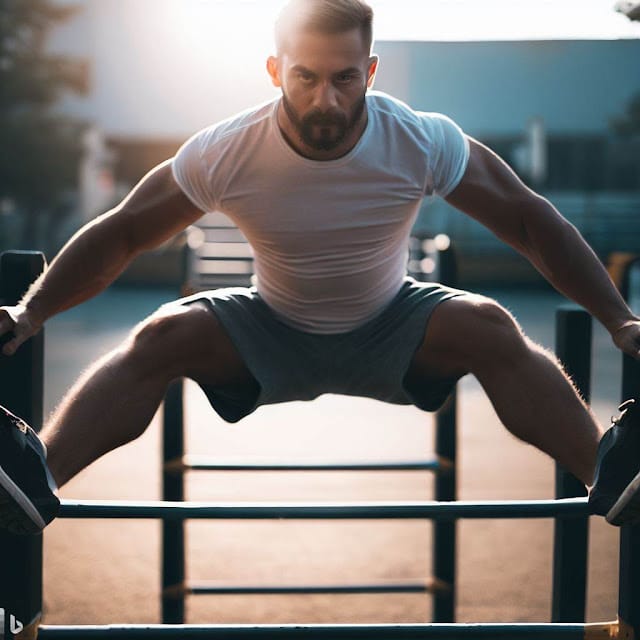


Calisthenics training is a form of exercise that uses your own body weight as resistance to develop strength, endurance, flexibility, and coordination. It is one of the
oldest and most effective ways to improve your physical fitness and health,
without the need for expensive equipment or gym memberships.
Calisthenics training can be done anywhere, anytime, and by anyone, regardless of your age, gender, or fitness level. You can use calisthenics to achieve various goals,
such as losing weight, building muscle, enhancing performance, or simply having
fun.
In this article, you will learn:
- What are the benefits
of calisthenics training - What are the basic
principles of calisthenics training - What are the best
calisthenics exercises for beginners, intermediates, and advanced
practitioners - How to create a
calisthenics workout plan that suits your needs and preferences - How to avoid common
mistakes and injuries in calisthenics training - How to track your
progress and results in calisthenics training
By the end of this article, you will have a solid foundation of knowledge and
skills to start or improve your calisthenics training journey. Let’s get
started!
I. What are the benefits of calisthenics training?
Calisthenics training has many benefits for your body and mind. Here are some of the main
ones:
- It improves your strength and muscle mass. Calisthenics training challenges your muscles to overcome the resistance of your body weight, which stimulates
them to grow stronger and bigger. You can also target different muscle groups
by varying the angles, positions, and movements of your body. - It improves your endurance and cardiovascular health. Calisthenics training increases your heart rate and oxygen consumption, which boosts your aerobic capacity and stamina. You can also improve your anaerobic capacity and power by performing high-intensity intervals or explosive movements.
- It improves your flexibility and mobility. Calisthenics training involves a full
range of motion for your joints and muscles, which enhances your flexibility
and mobility. You can also prevent or reduce stiffness, pain, and injuries
by stretching before and after your workouts. - It improves your balance and coordination. Calisthenics training requires you to control your body in space, which improves your balance and coordination.
You can also develop your proprioception, which is the awareness of your
body’s position and movement. - It improves your posture and alignment. Calisthenics training strengthens your core muscles, which support your spine and pelvis. This helps you maintain a good posture and alignment, which prevents or corrects common postural problems such as slouching, hunching, or tilting.
- It improves your mental health and well-being. Calisthenics training releases endorphins, which are natural chemicals that make you feel happy and relaxed. You can also reduce stress, anxiety, depression, and boredom by engaging in physical activity that challenges you and gives you a sense of accomplishment.
II. What are the basic principles of calisthenics training?
Calisthenics training is based on some simple but important principles that you should
follow to get the most out of it. Here are some of them:
- Use proper form andtechnique. Thisis essential for preventing injuries and maximizing results. You shouldalways perform each exercise with full control, focus, and attention. Youshould also avoid cheating or compromising your form by using momentum, swinging, bouncing, or jerking.
- Progress gradually and systematically. This is crucial for avoiding plateaus and overtraining. You should always start with the basics and master them before moving on to more advanced variations or challenges. You should also increase the difficulty of your workouts gradually by manipulating the variables such as volume (reps or sets), intensity (load or speed), frequency (days per week), duration (time per session), rest (time between sets or exercises), or complexity (skill level or movement pattern).
- Listen to your body and adjust accordingly. This is important for optimizing recovery and performance. You should always pay attention to how you feel before, during, and after each workout. You should also modify or skip your workouts if you are sick, injured, tired, sore, or stressed.
- Have fun and enjoy the process. This is vital for staying motivated and consistent. You should always choose exercises that you like or find interesting, challenging, or rewarding. You should also vary your workouts regularly to avoid boredom and monotony. You should also celebrate your achievements and appreciate your progress.
III. What are the best calisthenics exercises for beginners, intermediates, and advanced practitioners?
Calisthenics exercises can be classified into different categories based on the muscle groups they target, the skills they require, or the equipment they use. Here are some
of the most common and effective calisthenics exercises for each category,
along with their difficulty levels:
Push exercises.

These are exercises that involve pushing your body away from the ground or an object, such as a wall, a bar, or a ring. They mainly work your chest, shoulders, triceps, and core muscles. Some examples are:
- Push-ups (beginner to intermediate)
- Dips (intermediate to advanced)
- Handstand push-ups (advanced)
- Pull exercises.

These are exercises that involve pulling your body towards the ground or an object, such as a bar, a ring, or a rope. They mainly work your back, biceps, forearms, and core muscles. Some examples are:
- Pull-ups (intermediate to advanced)
- Chin-ups (intermediate to advanced)
- Inverted rows (beginner to intermediate)
- Leg exercises.

These are exercises that involve moving your legs against the resistance of your body weight or gravity. They mainly work your quads, hamstrings, glutes, calves, and core
muscles. Some examples are:- Squats (beginner to intermediate)
- Lunges (beginner to intermediate)
- Pistol squats (advanced)

- Core exercises.


These are exercises that involve stabilizing or moving your spine and pelvis against the resistance of your body weight or gravity. They mainly work your abs, obliques, lower
back, and hip flexors. Some examples are:
- Planks (beginner to intermediate)
- Leg raises (intermediate to advanced)
- Dragon flags (advanced)
- Skill exercises.

These are exercises that involve performing complex or acrobatic movements that require a high level of strength, balance, coordination, and flexibility. They mainly
work your whole body and challenge your nervous system. Some examples are:- Handstands (intermediate to advanced)
- Muscle-ups (advanced)
- Human flags (advanced)

- Equipment exercises.

These are exercises that involve using external objects or devices to add variety or difficulty to your workouts. They can work any muscle group or skill depending on the
type of equipment you use. Some examples are:- Resistance bands (beginner to intermediate)
- Kettlebells (intermediate to advanced)
- Parallettes (intermediate to advanced)

IV. How to create a calisthenics workout plan that suits your needs and preferences?
Calisthenics workout plans can be designed according to different factors such as your goals, experience level, availability, preferences, or equipment. Here are some
general guidelines on how to create a calisthenics workout plan that suits you:
- Define your goals. You should have a clear idea of what you want to achieve with calisthenics training, such as losing weight, building muscle, improving performance, or learning new skills. You should also set specific, measurable, achievable, realistic, and time-bound (SMART) goals that will help you track your progress and results.
- Assess your experience level. You should have a realistic evaluation of your current strength, endurance, flexibility, and skill level in calisthenics training. You should also identify your strengths and weaknesses in each category and focus on improving them accordingly.
- Choose your frequency and duration. You should decide how often and how long you want to train with calisthenics per week. This will depend on your goals, experience level, availability, recovery ability, and personal preference. A general recommendation is to train 3-5 times per week for 30-60 minutes per session.
- Choose your intensity and volume. You should decide how hard and how much you want to train with calisthenics per session. This will depend on your goals, experience level, recovery ability, and personal preference. A general recommendation is to train at a moderate to high intensity level for 8-15 reps per set for 3-5 sets per exercise.
- Choose your exercises and variations. You should select the calisthenics exercises that match your goals, experience level, equipment availability, and personal preference. You should also choose the appropriate variations that suit your current ability and challenge you progressively.
- Choose your rest periods and tempo. You should decide how long you want to rest between sets and exercises in your calisthenics workouts. This will depend on your goals, experience level, recovery ability, and personal preference. A general recommendation is to rest for 30-90 seconds between sets and 1-3 minutes between exercises. You should also decide how fast and how
smooth you want to perform each rep in your calisthenics workouts. This will
depend on your goals, experience level, recovery ability, and personal preference. A general recommendation is to use a tempo of 2-1-2-0, which means 2 seconds for the eccentric (lowering) phase, 1 second for the pause (bottom) phase, 2 seconds for the concentric (lifting) phase, and 0 seconds for the pause (top) phase.
V. How toavoid common mistakes and injuries in calisthenics training?

Calisthenics training is generally safe and effective, but it can also lead to some common mistakes and injuries if you are not careful or prepared. Here are some tips on
how to avoid them:
- Warm up properly. You should always warm up your body and joints before starting your calisthenics workouts. This will increase your blood flow, oxygen delivery, muscle temperature, and joint lubrication, which will improve your performance and prevent injuries. You can warm up by doing some light cardio, dynamic stretches, mobility drills, or activation exercises.
- Cool down properly. You should always cool down your body and joints after finishing your calisthenics workouts. This will decrease your heart rate, blood pressure, muscle tension, and inflammation, which will enhance your recovery and prevent injuries. You can cool down by doing some low-intensity cardio, static stretches, foam rolling, or massage.
- Use proper progression and regression. You should always use the appropriate level of difficulty for each exercise in your calisthenics workouts. This will ensure that you are challenging yourself enough to stimulate adaptation, but not too much to cause injury or burnout. You can progress or regress each exercise by changing the leverage, range of motion, stability, or assistance.
- Use proper recovery and nutrition. You should always give your body enough time and nutrients to recover and grow from your calisthenics workouts. This will ensure that you are repairing the damage caused by training, replenishing the energy used by training, and building new muscle and strength. You can recover and nourish your body by getting enough sleep, hydration, protein, carbs, fats, vitamins, minerals, and antioxidants.
- Use proper form and technique. You should always perform each exercise with full control, focus, and attention. You should also avoid cheating or compromising your form by using momentum, swinging, bouncing, or jerking.
VI. How to track your progress and results in
calisthenics training?
Calisthenics training is a journey that requires patience, consistency, and dedication. It
is also important to track your progress and results along the way to see how
far you have come and how much further you can go. Here are some ways to track
your progress and results in calisthenics training:
- Take photos and videos. You can take photos and videos of yourself before starting your calisthenics training program and periodically throughout it. This will help you see the changes in your physique, posture, alignment, and skills visually.
- Measure your body weight and body fat percentage. You can measure your body weight and body fat percentage using a scale or a caliper before starting your calisthenics training program and periodically throughout it. This will
help you see the changes in your body composition numerically. - Test your strength and endurance. You can test your strength and endurance by performing a max rep test or a timed test for each exercise in your calisthenics training program before starting it and periodically throughout it. This will help you see the changes in your performance quantitatively.
- Keep a log or a journal. You can keep a log or a journal of your
calisthenics workouts by recording the date, time, duration, exercises,
sets, reps, rest periods, tempo, intensity level, feedback, comments,
challenges, achievements, etc. This will help you see the changes in your
training qualitatively.
Conclusion
Calisthenics training is a great way to build a strong and fit body with minimal equipment and maximum benefits. It can help you improve your strength, endurance, flexibility,and balance, coordination, posture, alignment, mental health, and well-being.
By following the basic principles, choosing the best exercises, creating a
suitable workout plan, avoiding common mistakes and injuries, and tracking your
progress and results, you can achieve amazing results with calisthenics
training.
If you are interested in learning more about calisthenics training or getting
started with it, you can check out some of these resources: [Complete Calisthenics: The Ultimate Guide to Bodyweight Exercises] A comprehensive book that covers everything you need to know about calisthenics training.
I hope you enjoyed this article and found it useful and informative. If you have
any questions, comments, or feedback, please feel free to leave them below. I
would love to hear from you and help you with your calisthenics training
journey.
Thank you for reading and happy training!
FAQs
Here are some of the most frequently asked questions about calisthenics training:
- Q: Can I build muscle with calisthenics training?
- A: Yes, you can build muscle with calisthenics training. Calisthenics training stimulates your muscles to grow stronger and bigger by using your body weight as resistance. However, the amount of muscle you can build with calisthenics
training depends on several factors, such as your genetics, nutrition, recovery, and training variables. To maximize your muscle growth with
calisthenics training, you should follow these tips:- Eat enough calories and protein to support your muscle growth
- Train at a high intensity level and use progressive overload to challenge your muscles
- Train each muscle group at least twice per week and use a variety of exercises and variations
- Rest enough between sets and exercises and get enough sleep to allow your muscles to recover and grow
- Q: Can I lose weight with calisthenics training?
- A: Yes, you can lose weight with calisthenics training. Calisthenics training burns calories and fat by increasing your heart rate and oxygen consumption. However, the amount of weight you can lose with calisthenics training depends on several factors, such as your genetics, nutrition, recovery, and training
variables. To maximize your weight loss with calisthenics training, you
should follow these tips:- Eat fewer calories than you burn to create a calorie deficit
- Eat enough protein and fiber to keep you full and preserve your muscle mass
- Train at a moderate to high intensity level and use high-intensity intervals or circuits to boost your metabolism
- Train each muscle group at least twice per week and use a variety of exercises and variations
- Drink enough water and avoid sugary drinks to stay hydrated and reduce your appetite
- Q: How long does it take to see results with calisthenics training?
- A: The time it takes to see results with calisthenics training varies from person to person, depending on several factors, such as your starting point, goals,
genetics, nutrition, recovery, and training variables. However, a general
rule of thumb is that you can expect to see some noticeable results with
calisthenics training within 4-8 weeks of consistent and progressive
training. To speed up your results with calisthenics training, you should
follow these tips:- Set SMART goals and track your progress and results regularly
- Follow a structured and balanced workout plan that suits your needs and preferences
- Be consistent and dedicated with your training and stick to your plan
- Be patient and realistic with your expectations and enjoy the process
Q.What is the difference between calisthenics and weightlifting?
A. The difference between calisthenics and weightlifting is that they use different
types of resistance to challenge your muscles and improve your strength.
Calisthenics uses your own body weight as resistance, while weightlifting uses
external weights such as dumbbells, barbells, or machines.
Both calisthenics and weightlifting have their own benefits and drawbacks, depending
on your goals, preferences, and experience level. Some of the main differences
are:
- Calisthenics is more convenient and affordable, as you don’t need any special equipment or gym membership. You can do it anywhere, anytime, and by anyone. Weightlifting requires access to weights or machines, which can be costly and limited.
- Calisthenics involves compound exercises, which means it uses multiple muscle groups at once. It requires a lot of movement, which makes it better for burning calories, losing fat, and defining your muscles. Weightlifting involves isolated
exercises, which means it targets specific muscle groups individually. It
requires less movement, which makes it better for building muscle mass,
strength, and power. - Calisthenics improves your flexibility, balance, coordination, and endurance, as it involves a full range of motion for your joints and muscles. It also enhances your body awareness and control. Weightlifting improves your posture,
alignment, and stability, as it strengthens your core and spine. It also
increases your bone density and joint health. - Calisthenics is harder to progress and measure, as you need to modify the difficulty of the exercises by changing the leverage, range of motion, stability, or
assistance. You also need to be creative and adaptable to challenge
yourself. Weightlifting is easier to progress and measure, as you can
simply increase the weight or resistance of the exercises. You also have a
clear and objective way to track your performance.
- Q. What are the various equipment required for calisthenics?
- A. You can do calisthenics with minimal equipment, but having some basic items can help you perform more exercises and challenge yourself more.
1. Pull-up bar: A pull-up bar is a horizontal bar that you can hang from and perform various pulling exercises, such as pull-ups, chin-ups, muscle-ups, and leg raises. Pulling exercises work your back, biceps, forearms, and core muscles. A pull-up bar can be mounted on a wall, a door frame, or a free-standing structure. One example of an ergonomic pull-up bar is Amazefan.
2. Resistance bands: Resistance bands are elastic bands that provide variable resistance to your movements. You can use them to add difficulty to your bodyweight exercises, such as push-ups, squats, lunges, and rows. You can also use them to assist you with harder exercises, such as pull-ups and dips. Resistance bands come in different sizes, lengths, and strengths. Some examples of resistance bands are Resistance tubes and Resistance bands.
3. Parallettes: Parallettes are small parallel bars that you can place on the floor and use for various pushing and balancing exercises, such as dips, push-ups, handstands, planches, and L-sits. Parallettes work your chest, triceps, shoulders, and core muscles. They also improve your wrist mobility and stability. Parallettes can be made of wood, metal, or plastic. Some examples of parallettes are bodymechanicsglobal push-up bar & paralletes.
4. Gymnastic rings: Gymnastic rings are circular rings that hang from straps or ropes. You can use them to perform various pulling and pushing exercises in an unstable environment, which challenges your strength, coordination, and balance. Gymnastic rings work your entire upper body and core muscles. Some examples of gymnastic rings exercises are ring rows, ring dips, ring push-ups, ring pull-ups, and ring muscle-ups. Gymnastic rings can be made of wood, metal, or plastic. Some examples of gymnastic rings are PACEARTH Wood Gymnastics Rings.
5. Weighted vest: A weighted vest is a vest that has pockets or compartments where you can add or remove weights to adjust the load. You can wear a weighted vest to increase the resistance of your bodyweight exercises, such as squats, lunges, push-ups, pull-ups, dips, and burpees. A weighted vest works your entire body and improves your cardiovascular fitness. Weighted vests come in different sizes, shapes, and capacities. Some examples of weighted vests are Aduro
Sport Adjustable Weighted Vest .
6. Kettlebells. A kettlebell is a type of weight that is shaped like a ball with a handle on top. It is used for various exercises that involve swinging, lifting, or throwing the kettlebell. Kettlebell training can improve your strength, endurance, flexibility, and
balance. Kettlebells come in different sizes and weights, ranging from 5 lbs to over 100 lbs. Some examples of kettlebell exercises are swings, snatches, cleans, presses, squats, lunges, rows, and Turkish get-ups. One example of Kettlebell is Flexnest the Flexikettle 7-in-1.
These are some of the most popular calisthenics equipment that you can use for your home workouts. There are many other items that you can also use for
calisthenics, such as dip bars, sliders, sandbags, speed ropes, chalks, gloves,
etc.
Feeling Inspired?
Start your Lord
Lifestyle journey here.
Disclaimer: This article is for informational and educational purposes only. It is not intended to provide medical advice or to diagnose, treat, cure, or prevent any disease.
You should always consult your doctor before taking any supplement or drug,
especially if you have any medical conditions or take any medications. You
should also do your own research and verify the information and claims made in
this article. We are not responsible for any adverse effects or consequences
that may result from using any of the products or information mentioned in this
article. Use at your own risk and discretion.
This article contains affiliate links.