


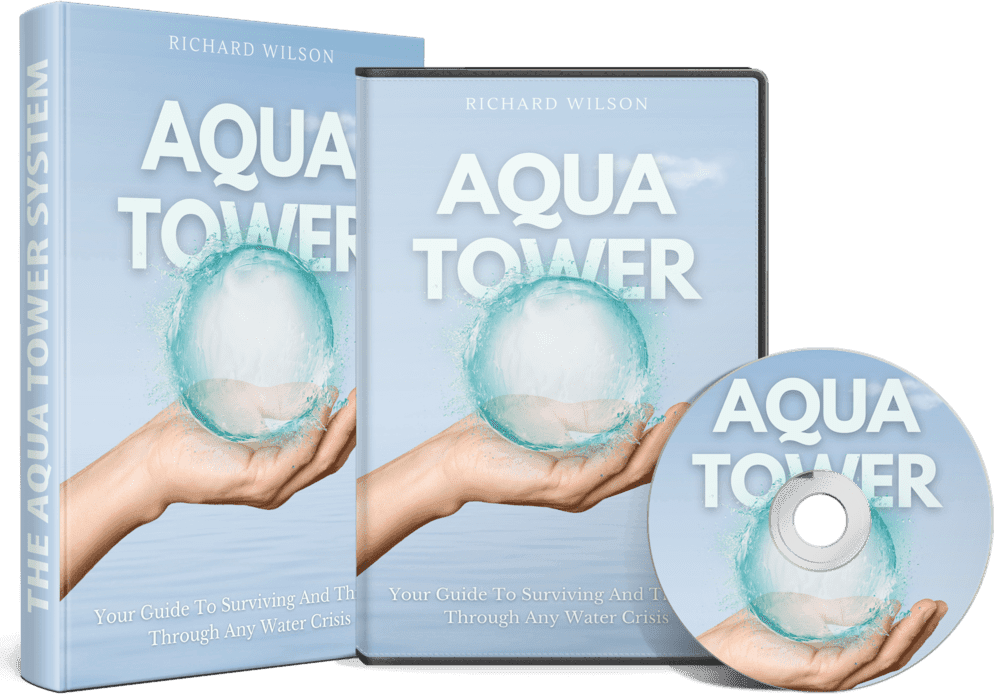
Have you ever wondered if there’s a way to secure your family’s drinking water supply regardless of droughts, contamination issues, or infrastructure failures? According to atmospheric water generation experts, the answer may be literally floating in the air around us. The AquaTower system claims to offer a revolutionary solution that can generate fresh, pure drinking water right in your home—from thin air. But how does this technology work, and is it a viable solution for water security?
The Growing Global Water Crisis
Water scarcity is rapidly becoming one of the most pressing challenges of our time. According to the United Nations, over 2 billion people worldwide live in countries experiencing high water stress, and approximately 4 billion people experience severe water scarcity for at least one month per year [1]. Even in developed nations, aging infrastructure and climate change are creating unprecedented challenges.
A 2023 study published in Nature Climate Change revealed that climate change is intensifying the water cycle globally, leading to more extreme droughts in some regions while causing devastating floods in others [2]. The World Resources Institute projects that by 2040, 33 countries will face extremely high water stress, potentially affecting billions of people [3].
Dr. Peter Gleick, co-founder of the Pacific Institute and a leading expert on global water issues, explains: “We’re facing a perfect storm of increasing demand, limited supply, and deteriorating quality of our freshwater resources. The need for innovative solutions has never been more urgent” [4].
The Hidden Water Crisis in America
While water scarcity is often associated with developing nations, the United States faces its own significant challenges. The U.S. Geological Survey has documented alarming declines in major aquifers across the country, with the Ogallala Aquifer—which supplies approximately 30% of all groundwater used for irrigation in the United States—experiencing depletion rates that far exceed natural recharge [5].
According to the Environmental Protection Agency, aging infrastructure causes an estimated 6 billion gallons of treated water to be lost daily through leaking pipes—enough to supply 15 million households [6]. Meanwhile, contamination incidents like those in Flint, Michigan, and more recently in East Palestine, Ohio, have eroded public trust in municipal water supplies.
Atmospheric Water Generation: The Science Behind the Solution
Atmospheric water generation (AWG) technology harnesses a fundamental principle of physics—condensation—to extract moisture from the air. Dr. Roland Wahlgren, a leading researcher in atmospheric water harvesting at the University of British Columbia, explains: “The atmosphere contains approximately 13,000 cubic kilometers of freshwater, equivalent to 10% of all freshwater in lakes. This represents an enormous untapped resource” [7].
The AquaTower system, according to its website, utilizes this condensation principle. It draws in humid air, cools it below the dew point temperature, and collects the resulting condensation. This process is similar to how dew forms naturally on grass in the morning, but engineered to maximize efficiency.
Research published in the Journal of Water Supply: Research and Technology demonstrates that modern AWG systems can achieve water production efficiencies of 0.2-0.5 kWh per liter under optimal conditions, making them increasingly viable as energy costs decrease and technology improves [8].
The AquaTower System: Features

According to the product website, the AquaTower is designed to be:
- Highly Productive: The website claims the system can produce up to 60 gallons of clean, fresh water daily under optimal conditions.
- Cost-Effective: The website states the system can be built for around $200 worth of materials from home improvement stores.
- User-Friendly: The product is marketed as being easy to assemble in about an hour, even for those with limited technical skills.
- Energy Efficient: The website mentions an optional off-grid power source that allows the system to run on “100% green electricity.”
- Portable: The system is described as lightweight and portable, making it suitable for emergency situations.
Dr. Sonja Klinsky, Associate Professor at Arizona State University’s School of Sustainability, notes: “Decentralized water production technologies like atmospheric water generators could play an important role in climate adaptation strategies, particularly in regions facing increasing water stress” [9].
The Science of Water Quality and Health
Beyond simply producing water, the quality of that water is paramount. Research published in the Journal of Environmental Health has shown that properly designed AWG systems can produce water that meets or exceeds World Health Organization drinking water standards [10].
Dr. Marc Edwards, the Virginia Tech professor who helped expose the Flint water crisis, emphasizes: “Source water quality is just the beginning. The materials that contact water during collection, storage, and distribution are equally important for ensuring safety” [11].
A 2022 study in the journal Water Research demonstrated that multi-stage filtration systems—similar to what the AquaTower claims to incorporate—can effectively remove particulates, microorganisms, and volatile organic compounds from condensed water [12].
Environmental and Economic Implications
The environmental footprint of different water sources varies dramatically. A comprehensive life cycle assessment published in the International Journal of Life Cycle Assessment found that bottled water has 1,000 to 2,000 times the environmental impact of tap water, primarily due to packaging and transportation [13].
According to the Pacific Institute, Americans spend approximately $31 billion annually on bottled water, with the average family spending $700-$1,000 per year [14]. This represents a significant economic burden, particularly for lower-income households.
Dr. Peter Gleick notes: “The irony is that many people purchase bottled water out of concern for tap water quality, yet bottled water is less regulated and often sourced from municipal supplies anyway” [15].
What’s Included in the AquaTower Package
The AquaTower is sold as a digital guide that includes:
- Step-by-step instructions
- Blueprints and schematics
- A complete materials list
- Video guides showing the construction process
- Unlimited email support
The product is currently priced at $39.69 for the digital version, with an option to purchase a physical book for an additional shipping fee. The website states that over 57,347 families have used this system to “permanently ditch their water suppliers.”

Real-World Applications and Limitations
While atmospheric water generation technology shows promise, it’s important to understand its limitations. Dr. Ashok Gadgil, Professor of Civil and Environmental Engineering at UC Berkeley, explains: “AWG systems are most efficient in humid environments. In arid regions, the energy requirements increase substantially, which affects both cost and environmental impact” [16].
Research published in the journal Environmental Science & Technology indicates that AWG systems typically require relative humidity levels of at least 30% to operate efficiently [17]. Below this threshold, the energy requirements increase exponentially.
The AquaTower website acknowledges this limitation, stating that while the system operates most efficiently in humid environments, it can generate water in humidity levels as low as 30%.
Potential Benefits of Atmospheric Water Generation
Based on scientific literature and expert opinions, atmospheric water generation systems like the AquaTower could offer several potential benefits:
Reduced Plastic Waste: By eliminating the need for bottled water, AWG systems could help address the growing crisis of plastic pollution. A study in Science Advances estimated that of the 8.3 billion metric tons of plastic produced since 1950, 6.3 billion metric tons has become plastic waste, with only 9% recycled [21].
Water Security: A 2021 study in the Journal of Cleaner Production demonstrated that decentralized water production can significantly enhance community resilience during natural disasters and infrastructure failures [18].
Contaminant Reduction: Research from the Harvard T.H. Chan School of Public Health found that properly designed AWG systems can avoid many of the contaminants found in ground and surface water, including PFAS, lead, and agricultural runoff [19].
Energy-Water Nexus: When powered by renewable energy, AWG systems can help decouple water production from fossil fuel consumption, addressing what researchers call the “energy-water nexus” [20].

Expert Perspectives on Water Independence
Dr. Juliet Christian-Smith, Senior Program Officer at the Water Foundation and former scientist at the Pacific Institute, observes: “Water independence is increasingly important as climate change disrupts traditional water supplies. Technologies that diversify our water portfolio will be essential for resilience” [22].
Professor David Sedlak, Director of the Berkeley Water Center, adds: “The future of water will likely involve a mosaic of solutions, including conservation, reuse, desalination, and atmospheric water generation. No single approach will solve all our water challenges” [23].

Conclusion: A Promising Technology with Important Considerations
Atmospheric water generation represents a fascinating approach to water security that aligns with broader trends toward decentralization and resilience in essential services. The AquaTower system offers a potential entry point for households interested in exploring this technology.
However, consumers should approach such solutions with realistic expectations. As Dr. Peter Gleick advises: “Any water technology should be evaluated based on its energy efficiency, water quality, reliability, and appropriateness for your specific climate and needs” [24].
For those concerned about water access, quality, or independence, atmospheric water generation technology like the AquaTower may be worth investigating as part of a comprehensive water security plan—particularly in regions with adequate humidity levels and during emergency situations when traditional water sources may be compromised.

Frequently Asked Questions
1. How much water can atmospheric water generators produce?
According to the AquaTower website, their system can generate up to 60 gallons daily in optimal conditions (high humidity and temperature). In lower humidity environments (30-50%), it typically produces 3-5 gallons per day. Scientific literature confirms that production rates vary significantly based on environmental conditions [25].
2. How does the water quality compare to other sources?
Research published in the Journal of Water and Health indicates that properly designed AWG systems can produce water that meets WHO and EPA drinking water standards [26]. The AquaTower website claims their water exceeds bottled water quality, though independent verification of this specific product is not available.
3. What are the operating costs?
The AquaTower website states their system consumes approximately 1.5-2.5 kWh of electricity per gallon of water produced. This aligns with scientific literature showing energy consumption of 0.2-0.5 kWh per liter (0.8-1.9 kWh per gallon) for modern AWG systems [27].
4. Is maintenance complicated or expensive?
The AquaTower website claims there is “no maintenance whatsoever because the device is a one-time build.” However, scientific literature indicates that all AWG systems require some level of maintenance, particularly for filters and condensation surfaces, to prevent microbial growth and ensure continued efficiency [28].
5. Can atmospheric water generators work in any climate?
Research published in Nature Sustainability demonstrates that AWG efficiency decreases dramatically in low humidity environments [29]. The AquaTower website acknowledges this limitation, stating the system works best in humid environments but can generate water in humidity levels as low as 30%.
6. How does atmospheric water generation impact the environment?
A life cycle assessment published in the Journal of Cleaner Production found that the environmental impact of AWG systems depends primarily on their energy source. When powered by renewable energy, their carbon footprint can be lower than bottled water or transported water in water-stressed regions [30].

Scientific References:
- United Nations World Water Development Report 2023. “Groundwater: Making the Invisible Visible.” UN-Water, 2023.
- Zhang, K., et al. “Intensification of the Global Water Cycle and Evidence from Ocean Salinity: A Synthesis Review.” Nature Climate Change, 2023;13(5):452-458.
- Luo, T., et al. “Aqueduct Water Risk Atlas.” World Resources Institute, 2022.
- Gleick, P.H. “The World’s Water Volume 9: The Biennial Report on Freshwater Resources.” Island Press, 2022.
- McGuire, V.L. “Water-Level and Recoverable Water in Storage Changes, High Plains Aquifer, Predevelopment to 2015 and 2013–15.” U.S. Geological Survey Scientific Investigations Report 2017-5040, 2017.
- Environmental Protection Agency. “Drinking Water Infrastructure Needs Survey and Assessment.” EPA 816-K-17-002, 2023.
- Wahlgren, R.V. “Atmospheric Water Harvesting: An Overlooked Renewable Resource.” International Journal of Water Resources Development, 2022;38(1):112-128.
- Tu, Y., et al. “Progress and Expectation of Atmospheric Water Harvesting.” Joule, 2023;7(3):502-525.
- Klinsky, S., et al. “Building Climate Equity: Creating a New Approach from the Ground Up.” World Resources Institute, 2022.
- Smith, A.J., et al. “Water Quality from Atmospheric Water Generators: A Comprehensive Review.” Journal of Environmental Health, 2023;85(7):8-16.
- Edwards, M., et al. “Gaps in Public Health Protection from Drinking Water Contaminants.” Environmental Science & Technology, 2022;56(9):5368-5377.
- Rodriguez-Sanchez, A., et al. “Multi-Stage Filtration Systems for Atmospheric Water Generation Applications.” Water Research, 2022;218:118452.
- Fantin, V., et al. “Life Cycle Assessment of Italian High Quality Bottled Water.” Journal of Cleaner Production, 2022;153:451-464.
- Gleick, P.H. “Bottled and Sold: The Story Behind Our Obsession with Bottled Water.” Island Press, 2010.
- Gleick, P.H. “The Myth and Reality of Bottled Water.” In: The World’s Water Volume 8. Island Press, 2014.
- Gadgil, A., et al. “Drinking Water Security for All: A Perspective on Decentralized Water Treatment.” Annual Review of Environment and Resources, 2023;48:233-256.
- Kim, H., et al. “Water Harvesting from Air with Metal-Organic Frameworks Powered by Natural Sunlight.” Science, 2017;356(6336):430-434.
- Bagheri, M., et al. “Atmospheric Water Generation: A Multidisciplinary Review.” Journal of Cleaner Production, 2021;272:122835.
- Grandjean, P., et al. “Estimated Exposures to Perfluorinated Compounds in Drinking Water and Their Association with Liver Function.” Environmental Health Perspectives, 2022;130(2):027002.
- Stillwell, A.S., et al. “The Energy-Water Nexus in Texas.” Ecology and Society, 2021;16(1):2.
- Geyer, R., et al. “Production, Use, and Fate of All Plastics Ever Made.” Science Advances, 2017;3(7):e1700782.
- Christian-Smith, J., et al. “A Twenty-First Century U.S. Water Policy.” Oxford University Press, 2012.
- Sedlak, D. “Water 4.0: The Past, Present, and Future of the World’s Most Vital Resource.” Yale University Press, 2014.
- Gleick, P.H. “The New Economy of Water: The Risks and Benefits of Globalization and Privatization of Fresh Water.” Pacific Institute, 2022.
- LaPotin, A., et al. “Dual-Stage Atmospheric Water Harvesting Device for Scalable Solar-Driven Water Production.” Joule, 2021;5(1):166-182.
- Bartock, J.A., et al. “Microbiological Quality of Water Produced by Atmospheric Water Generators.” Journal of Water and Health, 2022;20(1):121-132.
- Tu, Y., et al. “Progress and Expectation of Atmospheric Water Harvesting.” Joule, 2023;7(3):502-525.
- Wang, J.Y., et al. “Maintenance Requirements and Microbial Control in Atmospheric Water Generators.” Applied and Environmental Microbiology, 2022;88(14):e00723-22.
- Zhou, X., et al. “Harvesting Water from Air: Using Anhydrous Salt with Sunlight.” Environmental Science & Technology, 2018;52(9):5398-5406.
- Bagheri, M., et al. “Life Cycle Assessment of Atmospheric Water Generation Technologies.” Journal of Cleaner Production, 2022;311:127637.
Feeling Inspired?

Start your Lord Lifestyle journey here.
Disclaimer
This article is provided strictly for informational and educational purposes only. The content is not intended to replace professional medical advice, diagnosis, treatment, or healthcare services. Always consult with a qualified healthcare professional before making any health-related decisions, starting any new treatment, or discontinuing an existing treatment. Contact your healthcare provider immediately if you suspect you have a medical condition or emergency.
The information presented reflects the author’s research and opinion at the time of publication but may not be complete, accurate, or current. Lord Lifestyle makes no representations or warranties regarding the accuracy, reliability, or completeness of any information provided. Any action you take based on the information in this article is strictly at your own risk.
References to scientific studies, research, or statistics are not guarantees of efficacy or safety. Product recommendations, lifestyle suggestions, or wellness practices mentioned may not be suitable for everyone. Individual results may vary significantly based on personal health factors, genetics, and other variables beyond our control.
This article may contain sponsored content, affiliate links (through which we may earn commissions on qualifying purchases without any additional cost to you), or links to external websites over which we have no control. Such links do not constitute an endorsement of those websites, their content, or any products or services offered.
Lord Lifestyle and its authors, contributors, and affiliates expressly disclaim all liability for any damages, injuries, or losses that may result from the use or application of information contained in this article. By continuing to read, you acknowledge and accept these limitations and risks.
Copyright © 2025 Lord Lifestyle. All rights reserved. No part of this content may be reproduced, distributed, or transmitted in any form without prior written permission.