


In today’s fast-paced, constantly connected world, the notion of time has taken on a new level of significance.
As we navigate through the complexities of modern life, juggling personal and professional responsibilities, the ability to effectively manage our time has become a crucial skill for success.
Time management is not merely a set of techniques or strategies; it is a profound understanding of how to harness the limited and precious resource of time, allowing us to optimize our productivity, reduce stress, and ultimately, unlock our full potential.
I. The Essence of Time Management
At its core, time management is the art of consciously controlling and allocating our time to align with our goals, priorities, and values.
It is a proactive approach to organizing our lives, ensuring that the tasks and activities we engage in are purposeful and meaningful.
The Consequences of Poor Time Management !
Poor time management can have far-reaching and detrimental effects on various aspects of our lives, including:
1. Decreased Productivity and Efficiency: When we lack control over our time, it becomes easier to fall into the trap of procrastination, multitasking, and constant distractions. This ultimately leads to incomplete tasks, missed deadlines, and a general sense of underachievement, hindering our ability to reach our full potential.
2. Increased Stress and Anxiety: The constant feeling of being overwhelmed and behind schedule can take a significant toll on our mental and emotional well-being. Chronic stress and anxiety not only impact our productivity but can also lead to various physical and psychological health issues.
3. Strained Relationships: Failing to prioritize and allocate time for loved ones, friends, and personal relationships can lead to strained connections and a lack of work-life balance. This imbalance can breed resentment, misunderstandings, and ultimately, a diminished quality of life.
4. Missed Opportunities: When we are constantly in a reactive mode, struggling to keep up with our schedules, we often miss out on valuable opportunities for growth, learning, and personal development. This can stunt our progress and hinder our ability to reach our full potential.
5. Diminished Sense of Control: Feeling perpetually overwhelmed and unable to manage our time effectively can lead to a sense of powerlessness and lack of control over our lives. This can have a profound impact on our self-confidence, motivation, and overall well-being.
Statistics:

– According to a survey by Gallup, only 39% of employees feel that their time at work is used effectively and efficiently (Source: Gallup)
– A study by the American Psychological Association found that individuals who reported high levels of stress were more likely to engage in unhealthy behaviors, such as overeating, smoking, and neglecting physical activity (Source: American Psychological Association)
- Research conducted by the Harvard Business Review revealed that employees who struggled with time management were more likely to experience burnout and decreased job satisfaction (Source: Harvard Business Review)
II. The Benefits of Mastering Time Management
By developing effective time management strategies, you can unlock a world of opportunities and experience a profound transformation in various aspects of your life.
1. Increased Productivity and Efficiency
One of the most tangible benefits of effective time management is the ability to accomplish more in less time. By prioritizing tasks, eliminating distractions, and utilizing proven techniques, you can optimize your productivity and efficiency. This translates into completing projects on time, meeting deadlines, and ultimately, achieving your goals with greater ease and less stress.
2. Enhanced Focus and Concentration
Time management techniques, such as the Pomodoro Technique and time blocking, can help you develop laser-sharp focus and concentration. By dedicating specific time periods to tasks without interruptions, you can enter a state of flow, allowing you to fully immerse yourself in the present moment and produce higher-quality work.
3. Reduced Stress and Improved Work-Life Balance
When you have a firm grasp on your time and priorities, you can effectively allocate time for work, personal pursuits, and leisure activities. This balance not only reduces stress and anxiety but also promotes overall well-being, allowing you to engage in activities that nourish your mind, body, and soul.
4. Better Decision-Making and Prioritization
Effective time management requires a keen understanding of your goals and the ability to prioritize tasks based on their importance and urgency. This skill translates into better decision-making across various aspects of your life, enabling you to make conscious choices that align with your values and long-term objectives.
5. Greater Sense of Control and Accomplishment
By taking control of your time, you regain a sense of agency over your life. As you witness the positive results of your time management efforts, you will experience a heightened sense of accomplishment and self-confidence, which can further motivate you to continue refining your skills and reaching new heights.
My experience:

When I first embarked on my journey of mastering time management, I was a struggling student, juggling multiple classes, extracurricular activities, and part-time work. I often found myself overwhelmed, procrastinating, and feeling like I was constantly playing catch-up. It wasn’t until I discovered the power of time blocking and the Pomodoro Technique that everything changed.
By dedicating specific blocks of time to each task or activity and working in focused 25-minute intervals, I was able to regain control over my schedule and significantly improve my productivity. The sense of accomplishment I felt after completing tasks within their allocated time slots was incredibly rewarding. Not only did my academic performance improve, but I also found more time to pursue personal interests and maintain a healthier work-life balance.
The transformative power of effective time management was undeniable, and it has since become an integral part of my lifestyle, enabling me to navigate the complexities of life with greater ease and fulfilment.
III. Time Management Strategies and Techniques
Mastering time management is not a one-size-fits-all approach; it requires a combination of strategies and techniques tailored to your unique needs, preferences, and goals.
In this comprehensive guide, we will explore some of the most powerful and effective time management methods, equipping you with the tools to take control of your time and achieve remarkable results.
A. The Eisenhower Matrix: Prioritizing Tasks Effectively
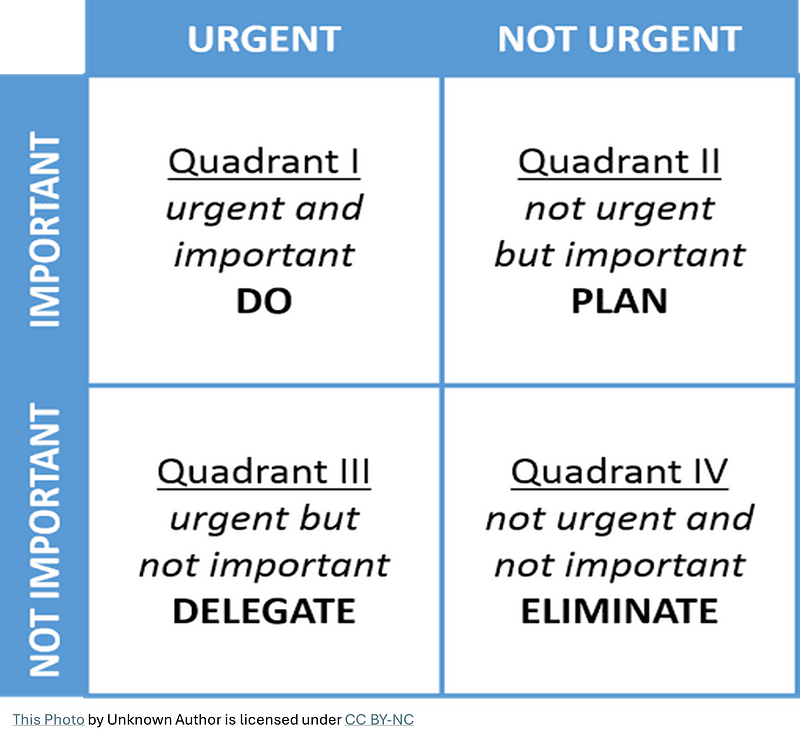
Named after the 34th President of the United States, Dwight D. Eisenhower, the Eisenhower Matrix is a simple yet powerful tool for prioritizing tasks based on their urgency and importance. By categorizing tasks into four quadrants, you can quickly identify which activities deserve your immediate attention and which ones can be delegated, scheduled, or even eliminated.
The four quadrants of the Eisenhower Matrix are:
1. Urgent and Important: These tasks are critical and require immediate action. Examples include meeting pressing deadlines, addressing emergencies, or completing high-priority projects.
2. Not Urgent but Important: These tasks are essential for achieving your long-term goals but do not require immediate attention. Examples include exercising, pursuing professional development opportunities, or working on long-term projects.
3. Urgent but Not Important: These tasks may demand your attention but are not directly aligned with your priorities. Examples include attending unnecessary meetings, responding to non-essential emails, or engaging in trivial activities.
4. Not Urgent and Not Important: These tasks are typically time-wasters and should be minimized or eliminated altogether. Examples include excessive social media usage, mindless web browsing, or engaging in activities that do not contribute to your goals.
Implementing the Eisenhower Matrix:
1. Create a list of all your current tasks and responsibilities.
2. Categorize each task into one of the four quadrants based on its urgency and importance.
3. Tackle the “Urgent and Important” tasks first, ensuring that you complete them within the required timeframe.
4. Schedule dedicated time blocks for the “Not Urgent but Important” tasks, ensuring that these tasks receive the attention they deserve without being overshadowed by more pressing matters.
5. Delegate or minimize the “Urgent but Not Important” tasks if possible, or schedule them for later if they cannot be avoided.
6. Eliminate or minimize the “Not Urgent and Not Important” activities, as they are often time-wasters that provide little to no value.
7. Review and adjust your quadrants regularly as priorities and circumstances change.
B. The Pomodoro Technique: Boosting Focus and Productivity
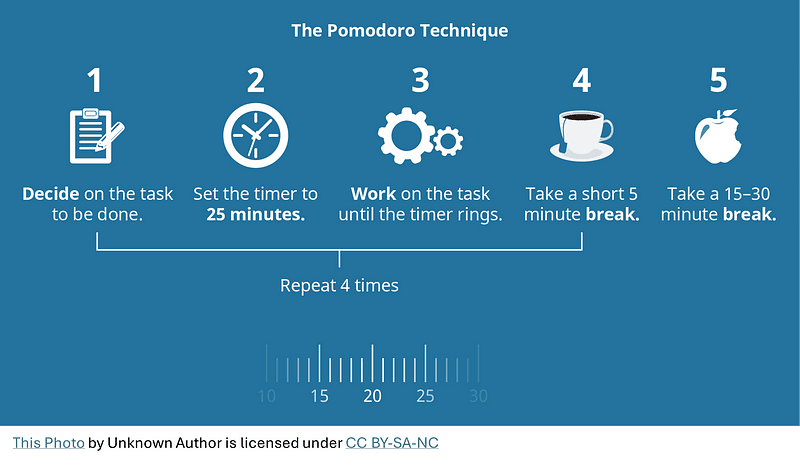
Developed by Francesco Cirillo in the late 1980s, the Pomodoro Technique is a time management method that harnesses the power of focused work intervals and strategic breaks. This technique is based on the principle that frequent, short breaks can improve overall productivity and concentration by combating mental fatigue and procrastination.
Implementing the Pomodoro Technique:
The beauty of the Pomodoro Technique lies in its simplicity and effectiveness. By breaking your work into manageable 25-minute intervals, you can maintain a high level of focus and concentration, minimizing the temptation to procrastinate or become distracted.
The structured breaks help to refresh your mind, preventing burnout and promoting sustained productivity throughout the day.
1. Identify the task or project you need to work on.
2. Set a timer for 25 minutes (you can use a dedicated Pomodoro app or a simple timer).
3. Work on the task without interruptions or distractions for the entire 25-minute period.
4. When the timer goes off, take a 5-minute break. Stand up, stretch, grab a snack, or do a quick activity to recharge.
5. After the break, start another 25-minute Pomodoro.
6. After completing four Pomodoros, take a longer break (15–30 minutes) to rejuvenate before starting a new set.
7. Repeat the cycle until you complete the task or reach your desired goal.
The Pomodoro Technique not only boosts productivity but also encourages you to develop a heightened sense of awareness and mindfulness. By committing to focused work intervals, you train your brain to stay present and engaged, minimizing the tendency to multitask or become distracted by external stimuli.
C. Time Blocking: Creating a Structured Schedule
Time blocking, also known as calendar blocking or schedule batching, is a time management technique that involves dedicating specific blocks of time to specific tasks or activities. This method not only helps you prioritize and allocate time effectively but also minimizes distractions and multitasking, which can significantly impact productivity.
By creating a structured schedule and adhering to it, you can ensure that important tasks receive the attention they deserve, while also making room for personal pursuits, self-care activities, and leisure time.
Implementing Time Blocking:
1. Start by creating a list of all your tasks and responsibilities for the day, week, or month.
2. Prioritize these tasks based on their importance and urgency, using a tool like the Eisenhower Matrix.
3. Open your calendar or a dedicated time-blocking app and start allocating time blocks for each task or activity.
4. Be realistic about the duration of each time block, taking into account your productivity levels and potential interruptions.
5. During each designated time block, eliminate distractions and focus solely on the assigned task.
6. After completing a time block, take a short break or move on to the next scheduled activity.
7. Review and adjust your schedule regularly to accommodate any changes or unforeseen circumstances.
Time blocking not only enhances productivity but also provides a sense of structure and control over your day. By dedicating specific time slots to tasks, you can avoid the constant decision-making fatigue that often accompanies a disorganized schedule, freeing up mental energy for more important endeavours.
D. Eliminating Distractions and Practicing Mindfulness
Distractions are productivity’s nemesis, and learning to minimize or eliminate them is crucial for effective time management.
In today’s digital age, we are constantly bombarded with notifications, social media updates, and various stimuli vying for our attention.
These distractions can significantly derail our focus, disrupt our workflow, and ultimately hinder our ability to manage our time effectively.
To combat distractions and cultivate a more mindful approach to time management, consider the following strategies:
1. Identify Your Distractions: The first step to eliminating distractions is to identify the sources that frequently derail your focus. This could include social media notifications, emails, unnecessary meetings, or even background noise in your work environment.
2. Create a Distraction-Free Environment: Once you’ve identified your distractions, take steps to create a dedicated workspace that minimizes external stimuli. This could involve turning off notifications, closing unnecessary browser tabs, or using noise-cancelling headphones.
3. Practice Digital Minimalism: In our digital age, it’s easy to become overwhelmed by the constant influx of information and stimuli. Embrace digital minimalism by reducing your online presence, limiting social media usage, and focusing on the essentials.
4. Implement Mindfulness Techniques: Mindfulness practices, such as meditation, deep breathing exercises, or mindful check-ins, can help you cultivate a greater sense of presence and reduce the impact of distractions. By developing a heightened awareness of your thoughts and actions, you can more effectively manage your attention and stay focused on the task at hand.
5. Batch and Schedule Distractions: While some distractions are unavoidable, you can minimize their impact by batching and scheduling them. For example, you could allocate a specific time slot for checking and responding to emails or engaging with social media, rather than allowing these activities to constantly interrupt your workflow.
6. Leverage Technology Mindfully: While technology can be a source of distraction, it can also be a powerful tool for enhancing productivity and focus. Explore productivity apps, website blockers, or time-tracking software that can help you stay on task and minimize digital distractions.
IV. Developing a Comprehensive Time Management Plan

While individual strategies and techniques are valuable tools in the pursuit of effective time management, true mastery lies in developing a comprehensive plan that encompasses all aspects of your life.
By creating a holistic approach, you can ensure that your time management efforts align with your goals, priorities, and values, ultimately leading to a more balanced and fulfilling life.
Step 1: Identify Your Goals and Priorities
The foundation of any successful time management plan is a clear understanding of your goals and priorities.
Without a well-defined sense of direction, it becomes challenging to allocate your time and resources effectively. Begin by reflecting on the various aspects of your life, such as your career, personal growth, relationships, health, and hobbies. Ask yourself the following questions:
– What are my short-term and long-term goals in each area of my life?
– Which goals are the most important and deserve the highest priority?
– What values and principles guide my decision-making process?
– How do I want to allocate my time and energy across different areas of my life?
Statistics:
– Research by the Harvard Business Review found that individuals who set clear goals and priorities are 10 times more likely to achieve their objectives than those who do not (Source: Harvard Business Review)
– A study by the University of Scranton revealed that only 8% of people achieve their New Year’s resolutions, often due to a lack of clear goal-setting and prioritization (Source: University of Scranton)
Step 2: Conduct a Time Audit
Once you have identified your goals and priorities, the next step is to conduct a time audit.
A time audit is a process of tracking and analyzing how you currently spend your time over a specific period, typically a week or two.
This exercise can provide valuable insights into your habits, patterns, and potential time-wasters, allowing you to make informed decisions about how to optimize your time management strategies.
To conduct a time audit, follow these steps:
1. Choose a tracking method: You can use a dedicated time-tracking app, a spreadsheet, or a simple notebook to record your activities.
2. Record your activities: Throughout the day, log the tasks and activities you engage in, as well as the duration of each activity.
3. Categorize your activities: Once you have collected your data, categorize your activities into relevant groups, such as work-related tasks, personal activities, leisure, or time-wasters.
4. Analyze your data: Examine your time audit data and identify patterns, habits, and areas where you may be wasting time or allocating resources inefficiently.
5. Identify opportunities for improvement: Based on your analysis, determine which areas of your schedule could benefit from adjustments or the implementation of time management strategies.
Step 3: Implement Time Management Techniques
Armed with a clear understanding of your goals, priorities, and current time management habits, the next step is to incorporate the time management techniques and strategies that best suit your needs.
This may involve a combination of methods such as the Eisenhower Matrix, Pomodoro Technique, time blocking, and eliminating distractions.
When implementing these techniques, it’s essential to consider your personal preferences, work style, and lifestyle factors. Some individuals may thrive with a highly structured approach, while others may prefer a more flexible system.
Experiment with different techniques and find the right combination that resonates with you and aligns with your goals.
Step 4: Continuously Evaluate and Adjust
Time management is not a one-time endeavor; it’s a continuous journey of self-reflection, evaluation, and adjustment. As you implement your time management plan, it’s crucial to monitor your progress, identify areas for improvement, and make necessary adjustments to ensure that your strategies remain effective and aligned with your evolving goals and priorities.
Here are some tips for continuous evaluation and adjustment:
1. Set regular check-in intervals: Whether it’s weekly, bi-weekly, or monthly, schedule dedicated time to review your time management efforts and assess their effectiveness.
2. Track your progress: Utilize tools or journals to document your achievements, challenges, and any adjustments you make to your strategies.
3. Seek feedback: Consider enlisting the support of a mentor, coach, or trusted friend who can provide an objective perspective on your time management practices and offer valuable insights.
4. Remain flexible: Recognize that life is unpredictable, and be prepared to adapt your strategies when faced with unexpected circumstances or changes in priorities.
5. Celebrate your successes: Acknowledge and celebrate your accomplishments, no matter how small. This positive reinforcement can help motivate you to continue refining your time management skills.
V. Time Management Tools and Resources

While developing effective time management skills is a personal journey, leveraging the right tools and resources can significantly enhance your efforts and provide valuable support along the way.
In this section, we will explore some of the most powerful and widely used time management tools and resources, equipping you with the necessary aids to maximize your productivity and achieve your goals.
A. Productivity Apps and Software
In the digital age, numerous apps and software solutions have been developed to streamline time management and productivity. These tools can automate tasks, minimize distractions, and provide valuable insights into your time usage patterns. Here are some popular options to consider:
1. Trello: A versatile project management tool that allows you to create boards, lists, and cards to organize and prioritize tasks, collaborate with others, and track progress.
2. RescueTime: A time-tracking app that monitors your computer usage and provides detailed reports on how you spend your time across various applications and websites, helping you identify potential time-wasters.
3. Forest: A productivity app that leverages gamification to encourage focus and minimize distractions. By “planting” a virtual tree and allowing it to grow as you work, you’re motivated to avoid switching between tasks or applications.
4. Todoist: A comprehensive task management app that enables you to create projects, tasks, subtasks, and set reminders and due dates, ensuring that nothing falls through the cracks.
5. Freedom: A website and app blocker that allows you to create customized blocklists to eliminate distractions and promote focused work sessions.
6. Notion: A versatile workspace that combines note-taking, task management, project planning, and collaboration features, enabling you to organize and manage various aspects of your life in one centralized platform.
These are just a few examples of the numerous productivity apps and software available. When selecting tools, consider your specific needs, workflow, and preferences to find the solutions that best complement your time management strategies.
B. Time Management Books and Guides
For those who prefer a more traditional approach, countless books and guides offer valuable insights, strategies, and practical advice for mastering time management. Here are some highly acclaimed and influential works to consider:
1. “The 7 Habits of Highly Effective People” by Stephen R. Covey: A renowned self-help classic that explores timeless principles for personal and professional effectiveness, including time management and prioritization.
2. “Getting Things Done” by David Allen: A comprehensive system for increasing productivity, reducing stress, and achieving a sense of control over your life by effectively managing tasks, commitments, and information.
3. “Deep Work” by Cal Newport: An exploration of the importance of focused, distraction-free work and strategies for cultivating the ability to concentrate deeply on cognitively demanding tasks.
4. “Essentialism: The Disciplined Pursuit of Less” by Greg McKeown: A thought-provoking guide that challenges readers to eliminate non-essential tasks and focus on the vital few activities that truly matter.
5. “The Productivity Project” by Chris Bailey: A practical guide based on the author’s personal year-long productivity experiment, offering insights and actionable strategies for optimizing productivity.
C. Online Courses and Workshops
In addition to books and apps, online courses and workshops offer interactive learning experiences and opportunities to develop time management skills under the guidance of experts. These resources often provide a structured curriculum, practical exercises, and the ability to connect with a community of learners. Here are some notable online courses and workshops to consider:
1. “Productivity and Time Management for the Overwhelmed” by Udemy: A comprehensive course that covers various time management strategies, including goal-setting, prioritization, and overcoming procrastination.
2. “Time Management: Working from Home” by Coursera: A specialized course designed to help remote workers and professionals effectively manage their time and maintain a healthy work-life balance.
3. “Mindfulness and Time Management” by edX: This course explores the integration of mindfulness practices with time management strategies, helping learners develop greater focus, productivity, and overall well-being.
4. “The Productivity Seminar” by Asian Efficiency: A live online seminar that teaches proven productivity systems and time management techniques, drawing from various methodologies and approaches.
5. “Time Management and Productivity Bootcamp” by CreativeLive: An intensive bootcamp format that combines expert instruction, hands-on exercises, and accountability methods to help participants overhaul their time management habits and boost productivity.
6. “Time Management for Entrepreneurs” by Skillshare: A course tailored specifically for entrepreneurs and business owners, offering strategies for managing competing priorities, delegating tasks, and optimizing productivity in a fast-paced environment.
VI. Overcoming Common Time Management Challenges

Despite our best intentions and efforts, mastering time management can be a continuous battle against various challenges and obstacles. In this section, we will explore some of the most common time management challenges and provide practical strategies to help you overcome them.
A. Procrastination: The Thief of Time
Procrastination is one of the most formidable foes of effective time management. It’s the tendency to delay or postpone tasks, often resulting in missed deadlines, increased stress, and a sense of guilt or regret. Procrastination can stem from various sources, including fear of failure, lack of motivation, or the allure of immediate gratification.
To combat procrastination, consider the following strategies:
1. Identify the root causes: Understand the underlying reasons behind your procrastination tendencies. Is it fear, lack of interest, or difficulty with task initiation?
2. Break tasks into smaller, manageable steps: Overwhelming tasks can trigger procrastination. By breaking them down into smaller, more manageable steps, the task becomes less daunting, and you’re more likely to take action.
3. Use the “Two-Minute Rule”: If a task can be completed in two minutes or less, do it immediately. This prevents small tasks from accumulating and becoming overwhelming.
4. Eliminate distractions: Create a distraction-free environment and minimize potential triggers that may tempt you to procrastinate.
5. Leverage accountability partners: Share your goals and deadlines with a trusted friend, colleague, or accountability partner. The added sense of responsibility can motivate you to follow through on your commitments.
6. Reward yourself: Celebrate small victories and milestones by treating yourself to a reward or activity you enjoy. This positive reinforcement can help build momentum and motivation.
Remember, overcoming procrastination is a process, and it may take time and persistence to develop new habits.
Be patient with yourself and celebrate each step forward.
B. Multitasking: The Illusion of Productivity
Multitasking, or attempting to juggle multiple tasks simultaneously, is often touted as a productivity booster. However, research has consistently shown that multitasking can significantly diminish our focus, increase errors, and ultimately reduce our overall productivity.
To combat the multitasking trap, consider the following strategies:
1. Practice single-tasking: Focus on one task at a time, giving it your undivided attention until completion.
2. Utilize time blocking: Dedicate specific time blocks to individual tasks, minimizing the temptation to switch between multiple activities simultaneously.
3. Eliminate distractions: Create a distraction-free environment and eliminate potential triggers that may tempt you to multitask.
4. Prioritize tasks effectively: Use techniques like the Eisenhower Matrix to prioritize tasks based on urgency and importance, ensuring you focus on the most critical activities first.
5. Take breaks: Build in regular breaks between tasks to refresh your mind and prevent mental fatigue, which can lead to a tendency to multitask.
6. Be mindful of task switching: When transitioning between tasks, take a moment to mentally prepare and refocus your attention on the new activity.
While it may seem counterintuitive, embracing single-tasking and eliminating multitasking can significantly boost your productivity, reduce errors, and improve your overall time management abilities.
C. Work-Life Imbalance: Finding Harmony
The constant demands of our professional and personal responsibilities can often lead to a skewed distribution of time and energy, resulting in burnout, stress, and a diminished quality of life.
To maintain a harmonious work-life balance, consider the following strategies:
1. Prioritize self-care: Make time for activities that nourish your physical, mental, and emotional well-being, such as exercise, hobbies, or spending time with loved ones.
2. Set boundaries: Establish clear boundaries between work and personal time, and stick to them. This could involve setting specific work hours, avoiding checking work emails during personal time, or taking regular breaks.
3. Learn to say “no”: Don’t overcommit yourself. Practice saying “no” to requests or obligations that do not align with your priorities or that may stretch you too thin.
4. Delegate and outsource: Identify tasks or responsibilities that can be delegated or outsourced to others, freeing up time and energy for more important priorities.
5. Leverage technology mindfully: Utilize productivity apps and tools to streamline your workflow and minimize distractions, but be mindful of not becoming overly reliant on technology at the expense of personal connections and downtime.
6. Seek support: Don’t hesitate to ask for help from family, friends, or professionals when needed. Building a support system can alleviate stress and help you maintain a better work-life balance.
VII. Cultivating a Time Management Mindset
While the strategies, techniques, and tools outlined in this comprehensive guide are invaluable resources, true mastery of time management begins with cultivating the right mindset. Developing a time management mindset involves embracing a set of beliefs, attitudes, and behaviors that align with the principles of effective time management.
A. Embrace a Growth Mindset
A growth mindset is the belief that our abilities and skills are not fixed but can be developed and improved through dedication and effort. This mindset is crucial in the realm of time management, as it encourages us to view challenges as opportunities for growth and continuously strive to refine our time management skills.
To cultivate a growth mindset, consider the following practices:
1. Embrace failure as a learning opportunity: Rather than perceiving setbacks or failures as permanent, view them as temporary obstacles that provide valuable lessons for improvement.
2. Seek feedback and learn from others: Be open to feedback from mentors, colleagues, or peers, and learn from their experiences and insights.
3. Celebrate progress and small wins: Acknowledge and celebrate your progress, no matter how small. This positive reinforcement can fuel your motivation and drive you to continue growing.
4. Adopt a lifelong learning mindset: Continuously seek knowledge, attend workshops, read books, or take courses to expand your time management skills and strategies.
B. Cultivate Self-Awareness and Mindfulness
Self-awareness and mindfulness are crucial components of effective time management.
By developing a heightened awareness of your thoughts, emotions, and behaviors, you can identify potential time-wasting habits, triggers, and distractions, and make conscious choices to manage your time more effectively.
To cultivate self-awareness and mindfulness, consider the following practices:
1. Engage in self-reflection: Set aside dedicated time to reflect on your time management practices, identify areas for improvement, and develop strategies for addressing them.
2. Practice mindfulness exercises: Incorporate mindfulness practices such as meditation, deep breathing, or mindful check-ins throughout your day to stay present and focused.
3. Keep a time management journal: Document your time management experiences, successes, and challenges in a journal, allowing you to track your progress and identify patterns or areas that require attention.
4. Seek feedback from others: Ask trusted friends, colleagues, or mentors for their observations and feedback on your time management habits, as they may offer valuable insights you may have overlooked.
5. Be compassionate with yourself: Recognize that developing self-awareness and mindfulness is an ongoing process, and be patient and compassionate with yourself as you navigate the journey.
C. Embrace Flexibility and Adaptability
While structured time management strategies and techniques are essential, it’s equally important to embrace flexibility and adaptability.
Life is unpredictable, and the ability to adapt to changing circumstances and unexpected challenges is crucial for maintaining control over your time and achieving your goals.
To cultivate flexibility and adaptability in your time management approach, consider the following practices:
1. Regularly review and adjust your plan: Set aside dedicated time to review your time management plan, assess its effectiveness, and make adjustments as needed. Embrace the idea that your plan is a living document that should evolve with your circumstances.
2. Develop contingency plans: Anticipate potential disruptions or unexpected events that may derail your schedule, and have contingency plans in place to minimize their impact on your productivity.
3. Practice prioritization and reprioritization: As circumstances change, learn to re-evaluate your priorities and adjust your focus accordingly. Techniques like the Eisenhower Matrix can help you prioritize tasks effectively in real-time.
4. Embrace imperfection: Recognize that perfection is an unrealistic and often counterproductive pursuit. Instead, strive for progress and continuous improvement, acknowledging that setbacks and challenges are inevitable.
5. Seek support and collaboration: Build a network of supportive individuals who can offer assistance, guidance, or resources when needed. Collaborative efforts can help alleviate the burden of unexpected challenges and promote adaptability.
6. Cultivate a resilient mindset: Develop a resilient mindset that allows you to bounce back from setbacks and navigate challenges with grace and determination. Embrace challenges as opportunities for growth and learning.
VIII. Time Management in Action: Real-Life Applications
Time management is not merely a theoretical concept; it is a practical skill that can be applied to various aspects of life, from personal growth and relationships to professional endeavours and beyond.
In this section, we will explore real-life applications of time management principles and strategies, demonstrating how these practices can transform your daily routines and help you achieve remarkable results.
A. Time Management for Personal Growth and Well-being
Effective time management is not only crucial for productivity and goal achievement but also plays a pivotal role in fostering personal growth and overall well-being.
1. Prioritizing self-care: Allocate dedicated time for self-care activities such as exercise, meditation, hobbies, or leisure pursuits. By making these activities a priority, you nurture your physical, mental, and emotional well-being, reducing stress and fostering a sense of balance.
2. Pursuing personal goals: Whether it’s learning a new skill, exploring a passion project, or working towards a life-long dream, effective time management allows you to allocate time and resources to pursue your personal goals without sacrificing other responsibilities.
3. Cultivating meaningful relationships: Building and maintaining strong relationships with loved ones, friends, and community requires intentional time investment. By prioritizing quality time with those who matter most, you can foster deeper connections and create lasting memories.
4. Achieving work-life balance: As discussed earlier, effective time management is essential for achieving a harmonious work-life balance. By setting boundaries, prioritizing self-care, and allocating time for personal pursuits, you can prevent burnout and maintain a sense of fulfilment across all aspects of your life.
B. Time Management in Professional Settings
In the professional realm, effective time management is a critical skill that can significantly impact productivity, career growth, and overall success.
1. Project management: Applying time management principles to project management can ensure timely completion of tasks, efficient resource allocation, and effective collaboration among team members. Techniques like time blocking, prioritization, and progress tracking can streamline project execution and mitigate potential delays or bottlenecks.
2. Meeting management: Meetings can be notoriously time-consuming and unproductive if not managed effectively. By implementing time management strategies such as setting agendas, enforcing time limits, and following up with action items, you can ensure that meetings are focused, efficient, and yield tangible outcomes.
3. Effective communication: Effective time management involves allocating dedicated time for communication, whether it’s responding to emails, conducting phone calls, or engaging in collaborative discussions. By prioritizing communication tasks and minimizing distractions, you can ensure timely and clear exchanges, fostering productive relationships with colleagues, clients, and stakeholders.
4. Professional development: Continuous learning and professional development are essential for career growth and staying relevant in today’s rapidly evolving job market. By integrating time management practices, you can prioritize learning opportunities, such as attending workshops, taking courses, or engaging in self-study, without compromising your existing responsibilities.
5. Leadership and delegation: For those in leadership roles, effective time management is crucial for delegating tasks, providing guidance and support to team members, and ensuring the overall efficiency and productivity of the organization. By modeling effective time management practices, leaders can inspire and empower their teams to achieve collective success.
C. Time Management for Students and Learners
Students and learners face unique time management challenges, juggling academic commitments, extracurricular activities, social obligations, and personal responsibilities. Mastering time management skills can be the key to academic success, personal growth, and a fulfilling student experience.
1. Study planning and scheduling: Allocate dedicated time blocks for studying, reviewing course materials, and completing assignments. Techniques like the Pomodoro Technique can enhance focus and productivity during study sessions, while time blocking ensures that academic responsibilities receive the attention they deserve.
2. Balancing academics and extracurricular activities: Effective time management allows students to pursue extracurricular activities, such as sports, clubs, or volunteering, without compromising their academic performance. By prioritizing tasks and allocating time accordingly, students can cultivate a well-rounded and enriching experience.
3. Time management for exams and projects: Exams and major projects often require careful planning and time management to ensure adequate preparation and successful completion. Utilizing strategies like backward planning, creating study schedules, and setting realistic deadlines can alleviate stress and increase the likelihood of achieving desired outcomes.
4. Work-life balance for working students: For students juggling academic commitments with part-time or full-time employment, effective time management is crucial for maintaining a healthy work-life balance. By setting clear boundaries, prioritizing tasks, and leveraging productivity tools, working students can navigate the demands of their responsibilities without sacrificing their well-being or academic performance.
5. Lifelong learning and continuous education: Time management skills acquired during the student years can serve as a foundation for lifelong learning and continuous education. As individuals pursue professional development, additional certifications, or advanced degrees later in life, effective time management will allow them to balance these endeavors with other commitments, fostering personal and professional growth.
IX. Digital Minimalism and Mindful Technology Use
While technology can be a powerful ally in time management, it’s important to approach it with a balanced and mindful perspective.
The concept of digital minimalism encourages us to be intentional about our technology use, minimizing distractions, and focusing on the tools and practices that truly enhance our productivity and well-being.
1. Conduct a digital declutter: Regularly review the apps, software, and digital tools you use, and eliminate those that no longer serve a productive purpose or contribute to digital clutter and distractions.
2. Implement distraction-free modes: Many productivity apps and tools offer distraction-free modes or website blockers that can help you eliminate digital distractions during focused work sessions.
3. Practice digital detoxes: Consider scheduling regular digital detoxes, where you intentionally disconnect from digital devices and social media for a set period, allowing you to recharge and reconnect with the present moment.
4. Cultivate mindful technology habits: Develop habits that promote mindful technology use, such as turning off notifications during focused work periods, setting specific times for checking emails or social media, and establishing boundaries between work and personal time.
5. Prioritize face-to-face interactions: While digital communication tools can be efficient, prioritize face-to-face interactions whenever possible, as they can foster deeper connections, better understanding, and more meaningful communication.
X. Time Management in Collaborative Settings
Effective time management is not only crucial for individual productivity but also plays a vital role in fostering collaboration, teamwork, and organizational success.
In today’s interconnected world, where projects often involve multiple stakeholders and cross-functional teams, mastering time management in collaborative settings can be the key to achieving collective goals and maintaining a harmonious working environment.
A. Establishing Shared Goals and Priorities
In collaborative settings, it’s essential to establish shared goals and priorities from the outset. This alignment ensures that all team members are working towards a common objective and can allocate their time and resources accordingly.
To establish shared goals and priorities, consider the following steps:
1. Facilitate open discussions: Encourage open discussions among team members to understand each individual’s goals, priorities, and constraints. This fosters a shared understanding and helps identify potential conflicts or misalignments early on.
2. Define clear objectives: Collaboratively define the project’s objectives, desired outcomes, and key milestones, ensuring that everyone is on the same page and understands the collective vision.
3. Prioritize tasks and responsibilities: Jointly prioritize tasks and responsibilities based on their importance and urgency, leveraging techniques like the Eisenhower Matrix or the Pareto Principle (80/20 rule).
4. Allocate resources effectively: Assign tasks and responsibilities based on team members’ strengths, availability, and capacity, ensuring a fair and balanced distribution of workload.
5. Set realistic timelines: Establish realistic timelines and deadlines for project milestones, taking into account potential constraints, dependencies, and unforeseen circumstances.
B. Effective Communication and Collaboration Tools
In collaborative settings, effective communication and the utilization of collaboration tools are essential for seamless teamwork and time management.
These tools enable real-time information sharing, task tracking, and efficient coordination, minimizing misunderstandings, redundancies, and delays.
1. Project management platforms: Tools like Asana, Trello, and Jira provide centralized platforms for managing projects, assigning tasks, tracking progress, and facilitating communication among team members.
2. Video conferencing and virtual meeting tools: Applications such as Zoom, Microsoft Teams, and Google Meet enable seamless virtual meetings, discussions, and presentations, allowing remote teams to collaborate effectively and minimize time spent on travel or coordination.
3. File sharing and cloud storage: Cloud-based file sharing and storage solutions like Google Drive, Dropbox, and OneDrive facilitate real-time collaboration, version control, and easy access to shared documents and resources.
4. Team communication apps: Applications like Slack, Microsoft Teams, and Flock facilitate real-time communication, file sharing, and collaboration within teams, reducing the need for lengthy email chains and minimizing communication delays.
5. Collaborative document editing: Tools like Google Docs, Microsoft Office 365, and Notion enable multiple team members to simultaneously edit and provide feedback on shared documents, streamlining the review and revision process.
C. Delegation and Accountability
In collaborative settings, effective delegation and a sense of accountability are crucial components of successful time management.
1. Clearly define roles and responsibilities: Establish clear roles and responsibilities for each team member, ensuring that everyone understands their specific tasks and areas of ownership.
2. Match tasks to strengths: Delegate tasks based on team members’ individual strengths, expertise, and interests, increasing the likelihood of efficient and high-quality work.
3. Provide clear instructions and deadlines: When delegating tasks, provide detailed instructions, guidelines, and clear deadlines to ensure that expectations are well-understood and to minimize the need for follow-up or rework.
4. Foster a culture of accountability: Cultivate a culture of accountability within the team, where team members take ownership of their assigned tasks and responsibilities, and are held accountable for meeting deadlines and delivering quality work.
5. Implement progress tracking: Establish regular check-ins and progress updates to monitor the status of delegated tasks and address any potential roadblocks or delays in a timely manner.
D. Managing Meetings and Group Sessions
Meetings and group sessions are integral parts of collaborative work, but they can also be significant time drains if not managed effectively.
1. Set clear agendas: Distribute agendas in advance, outlining the meeting’s objectives, topics for discussion, and any pre-work or preparation required from attendees.
2. Assign roles: Designate roles such as a facilitator, timekeeper, and note-taker to ensure that the meeting stays on track, adheres to the allocated time, and that key decisions and action items are captured.
3. Prioritize and time-box: Prioritize agenda items and allocate specific time blocks for each item, ensuring that the most critical topics receive adequate attention without allowing discussions to derail or extend beyond the allotted time.
4. Encourage focused participation: Establish ground rules for focused participation, such as minimizing distractions, actively listening, and allowing speakers to finish their thoughts without interruption.
5. Follow up and document action items: At the end of the meeting, clearly document any action items, assignments, or follow-up tasks, along with their respective owners and due dates.
6. Evaluate and improve: Regularly evaluate the effectiveness of meetings and gather feedback from attendees to identify areas for improvement, adjusting meeting formats or practices as needed.
By implementing these time management strategies in meetings and group sessions, teams can maximize the productivity and efficiency of these collaborative gatherings, ensuring that everyone’s time is respected and that tangible outcomes are achieved.
E. Continuous Improvement and Adaptation
Effective time management in collaborative settings is an ongoing process that requires continuous improvement and adaptation.
As projects evolve, team dynamics shift, and external factors change, it’s essential to regularly assess and refine time management practices to ensure they remain effective and aligned with the team’s goals and objectives.
1. Conduct regular retrospectives: Schedule periodic retrospective meetings or sessions to reflect on the team’s time management practices, identify areas for improvement, and gather feedback from all team members.
2. Embrace iterative adjustments: Be open to adjusting and refining time management strategies based on the insights gained from retrospectives and ongoing project experiences.
3. Foster a culture of continuous learning: Encourage team members to share best practices, attend training sessions, or explore new time management techniques that could benefit the team’s collaborative efforts.
4. Adapt to changing circumstances: Remain flexible and adaptable to changing project requirements, shifting priorities, or external factors that may impact the team’s time management approach.
5. Celebrate successes and learn from failures: Recognize and celebrate the team’s time management successes, while also embracing failures as learning opportunities to further refine and improve collaborative time management practices.
By fostering a culture of continuous improvement and adaptation, teams can ensure that their time management strategies remain relevant, effective, and aligned with the ever-evolving demands of collaborative projects and teamwork.
Conclusion:

Mastering the art of time management is a transformative journey that empowers us to reclaim control over our lives, achieve our goals, and cultivate a profound sense of fulfillment. By embracing the strategies, techniques, and mindsets outlined in this comprehensive guide, we unlock the ability to navigate the complexities of modern life with grace and efficiency.
Time management is not merely a set of rigid rules or one-size-fits-all solutions; it is a dynamic and ever-evolving practice that requires self-awareness, adaptability, and a genuine commitment to continuous improvement. As we embark on this journey, we must remain open to exploring new approaches, embracing failures as learning opportunities, and celebrating even the smallest of victories.
Remember, effective time management is not about cramming more tasks into our already packed schedules; it is about intentionally aligning our actions with our values, priorities, and aspirations. By mastering this essential skill, we unlock the ability to pursue our passions, nurture meaningful relationships, and contribute to the world around us with purpose and authenticity.
As we navigate the ever-changing landscape of personal and professional demands, let us embrace time management as a lifelong practice, a catalyst for growth, and a testament to our unwavering commitment to living a life of intention, balance, and fulfillment.
Frequently Asked Questions (FAQs):
Q. How much time should I allocate for planning and organizing my schedule?
A. While there is no one-size-fits-all answer, it is generally recommended to spend at least 15–30 minutes each day or at the beginning of each week to review your priorities, schedule tasks, and make necessary adjustments.
Q. Is multitasking an effective time management strategy?
A. No, multitasking is often counterproductive and can decrease overall productivity and increase the likelihood of errors. It is generally better to focus on one task at a time and practice techniques like time blocking or the Pomodoro Technique to maintain concentration and avoid distractions.
Q. How can I stay motivated and avoid procrastination?
A. To stay motivated and combat procrastination, try breaking larger tasks into smaller, more manageable steps, set realistic deadlines, and reward yourself for completing tasks or reaching milestones. Additionally, identify and address the root causes of your procrastination, such as fear of failure or lack of interest.
Q. How can I prioritize tasks when everything seems important?
A. When faced with multiple important tasks, use a prioritization method like the Eisenhower Matrix or the ABCDE method. Categorize tasks based on their urgency and importance, and focus on the most critical tasks first. Additionally, consider the consequences of not completing each task and prioritize accordingly.
Q. How can I manage my time effectively when working remotely or from home?
A. To manage your time effectively when working remotely or from home, establish a dedicated workspace, create a routine, and set clear boundaries between work and personal time. Additionally, leverage productivity apps and software to minimize distractions and track your time effectively.
Q. How can I balance my time between work, personal life, and other responsibilities?
A. To achieve a healthy work-life balance, prioritize and schedule time for different areas of your life, set boundaries, learn to say “no” to non-essential commitments, delegate or outsource tasks when possible, and seek support from loved ones or professionals when needed.
Q. How can I manage time effectively when working on a team or collaborating with others?
A. When working on a team, establish shared goals, deadlines, and responsibilities. Utilize project management tools and schedules to keep everyone on track. Additionally, be mindful of potential delays or conflicts and address them proactively through clear communication and coordination.
Q. How can I avoid burnout while trying to manage my time effectively?
A. To avoid burnout, make sure to schedule breaks, prioritize self-care activities, and maintain a healthy work-life balance. Identify and address any sources of excessive stress or unrealistic expectations, and don’t hesitate to seek support or adjust your schedule when needed.
Q. How can I stay flexible and adapt my time management strategies to changing circumstances?
A. Regularly review your priorities, goals, and commitments, and make necessary adjustments to your time management strategies. Additionally, develop contingency plans for unexpected events or setbacks, and cultivate a resilient mindset that allows you to bounce back from challenges.
Q. What should I do if I struggle to stick to my time management plan?
A. If you find yourself struggling to stick to your time management plan, evaluate the potential reasons, such as unrealistic goals, external or internal distractions, or obstacles. Identify the root causes and make adjustments accordingly. Additionally, consider seeking accountability partners or mentors who can provide support and guidance.
REFERENCES:
1. Covey, S. R. (2013). The 7 Habits of Highly Effective People: Powerful Lessons in Personal Change. https://www.simonandschuster.com/books/The-7-Habits-of-Highly-Effective-People/Stephen-Covey/9781982137274
2. Allen, D. (2015). Getting Things Done: The Art of Stress-Free Productivity. https://gettingthingsdone.com/store/product.php?productid=17035&cat=3&page=
3. Newport, C. (2016). Deep Work: Rules for Focused Success in a Distracted World. https://www.calnewport.com/books/deep-work/
4. McKeown, G. (2014). Essentialism: The Disciplined Pursuit of Less. https://gregmckeown.com/books/essentialism/
5. Bailey, C. (2016). The Productivity Project: Accomplishing More by Managing Your Time, Attention, and Energy. https://alifeofproductivity.com/book/
6. Cirillo, F. (2018). The Pomodoro Technique: The Acclaimed Time-Management System That Has Transformed How We Work. https://francescocirillo.com/products/the-pomodoro-technique-book
7. Gallup. (2022). State of the Global Workplace Report. https://www.gallup.com/workplace/349484/state-of-the-global-workplace.aspx
8. American Psychological Association. (2022). Stress in America 2022 Survey. https://www.apa.org/news/press/releases/stress/2022/march-2022-survival-mode
9. Harvard Business Review. (2021). Time Management and Productivity: A Meta-Analysis. https://hbr.org/2021/03/time-management-is-about-more-than-life-hacks
10. University of Scranton. (2020). New Year’s Resolution Statistics. https://www.scranton.edu/academics/ctle/
11. Duhigg, C. (2014). The Power of Habit: Why We Do What We Do in Life and Business. https://charlesduhigg.com/the-power-of-habit/
12. Clear, J. (2018). Atomic Habits: An Easy & Proven Way to Build Good Habits & Break Bad Ones. https://jamesclear.com/atomic-habits
13. Pink, D. H. (2018). When: The Scientific Secrets of Perfect Timing. https://www.danpink.com/books/when/
14. Gladwell, M. (2008). Outliers: The Story of Success. https://www.gladwellbooks.com/titles/malcolm-gladwell/outliers/9780316040341/
15. Kahneman, D. (2011). Thinking, Fast and Slow. https://us.macmillan.com/books/9780374533557/thinkingfastandslow
Feeling Inspired?
Start your Lord Lifestyle journey here.
Disclaimer: This article is for informational and educational purposes only. It is not intended to provide medical advice or to diagnose, treat, cure, or prevent any disease. You should always consult your doctor before taking any supplement or drug, especially if you have any medical conditions or take any medications. You should also do your own research and verify the information and claims made in this article. We are not responsible for any adverse effects or consequences that may result from using any of the products or information mentioned in this article. Use at your own risk and discretion.
This article may contain sponsored/affiliate links and links to external sites.
